MILAN, ITALY. What began as a demonstration against soaring living costs turned into two days of unrest in the heart of Italy’s financial capital. Groups of young people clashed with police, damaged storefronts, looted businesses and attacked a Carabinieri patrol vehicle near Milan’s historic Piazza Duomo on October 17 and 18. The violence prompted a major security response and new government measures aimed at preventing similar incidents.
The demonstrations began Saturday, October 17, when more than 5,000 people joined a march associated with the Italia in Piazza movement. Participants raised concerns about rising prices, housing costs, public services and other political issues. The march initially proceeded peacefully, but the atmosphere changed when groups of masked individuals began confronting security forces around Via Broletto, Piazza Cordusio and Piazza Duomo.
VIDEO SHOWS ATTACK ON CARABINIERI VEHICLE IN CENTRAL MILAN
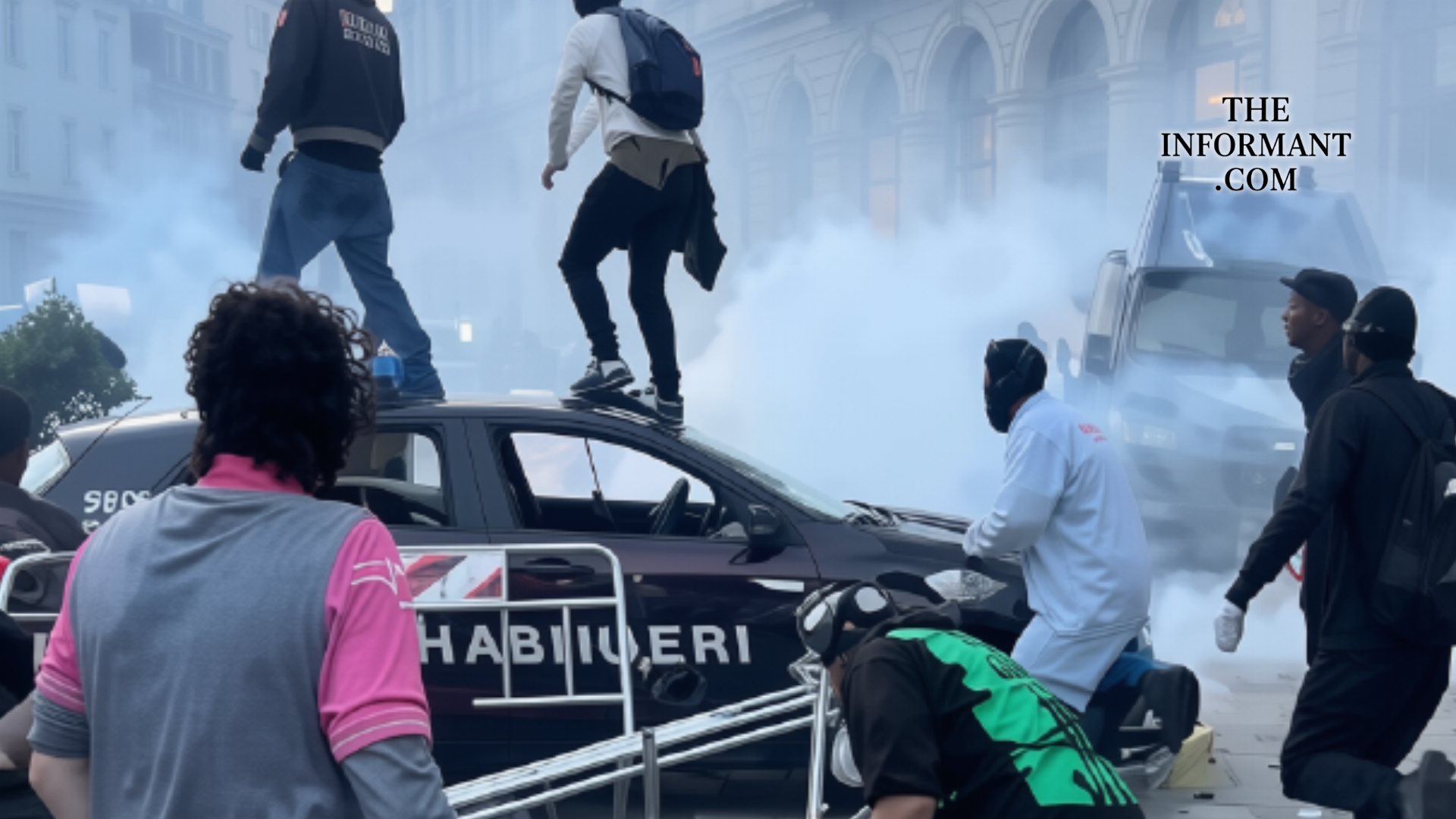
One of the most widely circulated scenes from Saturday’s unrest involved a Carabinieri patrol car surrounded by a group of people near Milan’s cathedral. Footage published by Italian news organizations shows individuals kicking the vehicle and throwing chairs, tables and other objects at it as officers attempted to withdraw from the confrontation.
The patrol car sustained extensive damage, becoming one of the most recognizable images from the disturbances. Other recordings documented broken glass, overturned street furniture and police advancing through the central shopping district. The footage confirms an attack on the vehicle, although it does not establish the identities or individual responsibility of everyone involved.
POLICE USE TEAR GAS AND WATER CANNONS AS STORES ARE LOOTED
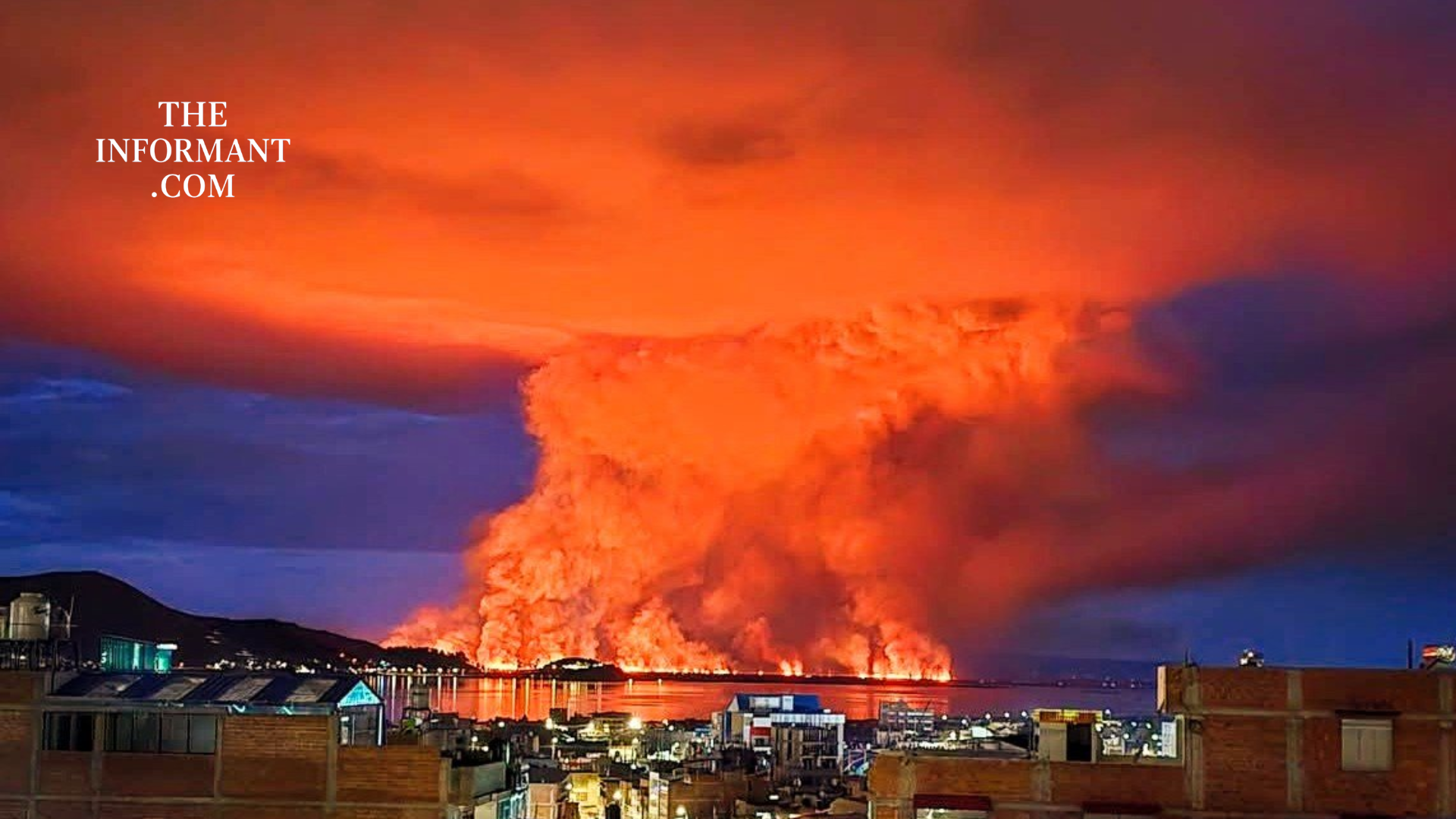
The violence extended into surrounding streets as masked individuals threw stones, bottles, fireworks and other projectiles toward police lines. Makeshift barricades were set on fire, while security forces deployed tear gas, water cannons and riot-control units to disperse groups involved in the clashes.
Some businesses in Milan’s central shopping district were damaged or looted. On Sunday, October 18, further disturbances were reported around Piazza Duomo, Via Torino and Piazza Cordusio, where storefronts were smashed and merchandise was taken from shops. Tourists, residents and business employees were caught close to the confrontations, while several establishments temporarily closed as a precaution.
HUNDREDS TAKEN TO POLICE STATIONS, WITH MINORS AMONG THOSE ARRESTED
The investigation expanded after the weekend. Italian government figures presented to Parliament on October 21 indicated that 343 people had been taken to police stations, 48 were arrested and 50 were formally reported to judicial authorities. Of those arrested, 34 were minors, according to subsequent reporting.
The distinction between people taken in for identification and those formally arrested is important. Not everyone questioned or temporarily detained was accused of committing a crime. Investigators continued reviewing surveillance cameras, social media recordings and other evidence to identify individuals potentially responsible for vandalism, looting and attacks on police.
MELONI’S GOVERNMENT APPROVES ADDITIONAL SECURITY MEASURES
Prime Minister Giorgia Meloni condemned the violence while distinguishing peaceful demonstrations from criminal destruction. Her government convened security discussions following the disturbances and approved a decree on October 20 addressing public safety and juvenile crime.
The measures include provisions for dealing with violent conduct during demonstrations, expanded procedures involving certain juvenile offenders and additional security resources. The cabinet also approved increasing the military contingent assigned to Milan’s Strade Sicure security operation by 500 personnel through December 31, 2026.
A proposal to grant the soldiers broader police powers was dropped following constitutional objections. The emergency decree is also subject to Italy’s parliamentary conversion process, which requires legislative action within 60 days.
PEACEFUL PROTESTS AND CRIMINAL VIOLENCE BECOME CENTRAL TO THE DEBATE
The disturbances have intensified disagreement over how Italian authorities should respond to social unrest. Milan Mayor Giuseppe Sala acknowledged the concerns raised by peaceful demonstrators while condemning attacks on security personnel and damage to businesses.
Investigators have also examined whether violent groups organized their actions through social media. However, officials have cautioned against assuming that every participant belonged to an established extremist organization. Determining responsibility requires evidence connecting specific individuals to specific acts.
WILL FURTHER DEMONSTRATIONS BRING NEW CLASHES?
Calls for additional demonstrations have continued circulating online, prompting concerns that unrest could return to Milan and other Italian cities. Security authorities are monitoring those developments while prosecutors continue reviewing the events of October 17 and 18.
The next questions concern the identification and prosecution of those responsible for the violence, the implementation of the government’s new security measures and whether future demonstrations can proceed without further clashes. For Milan, the aftermath has become both a public-safety challenge and a test of how Italy balances the right to protest with protecting residents, businesses and public spaces.