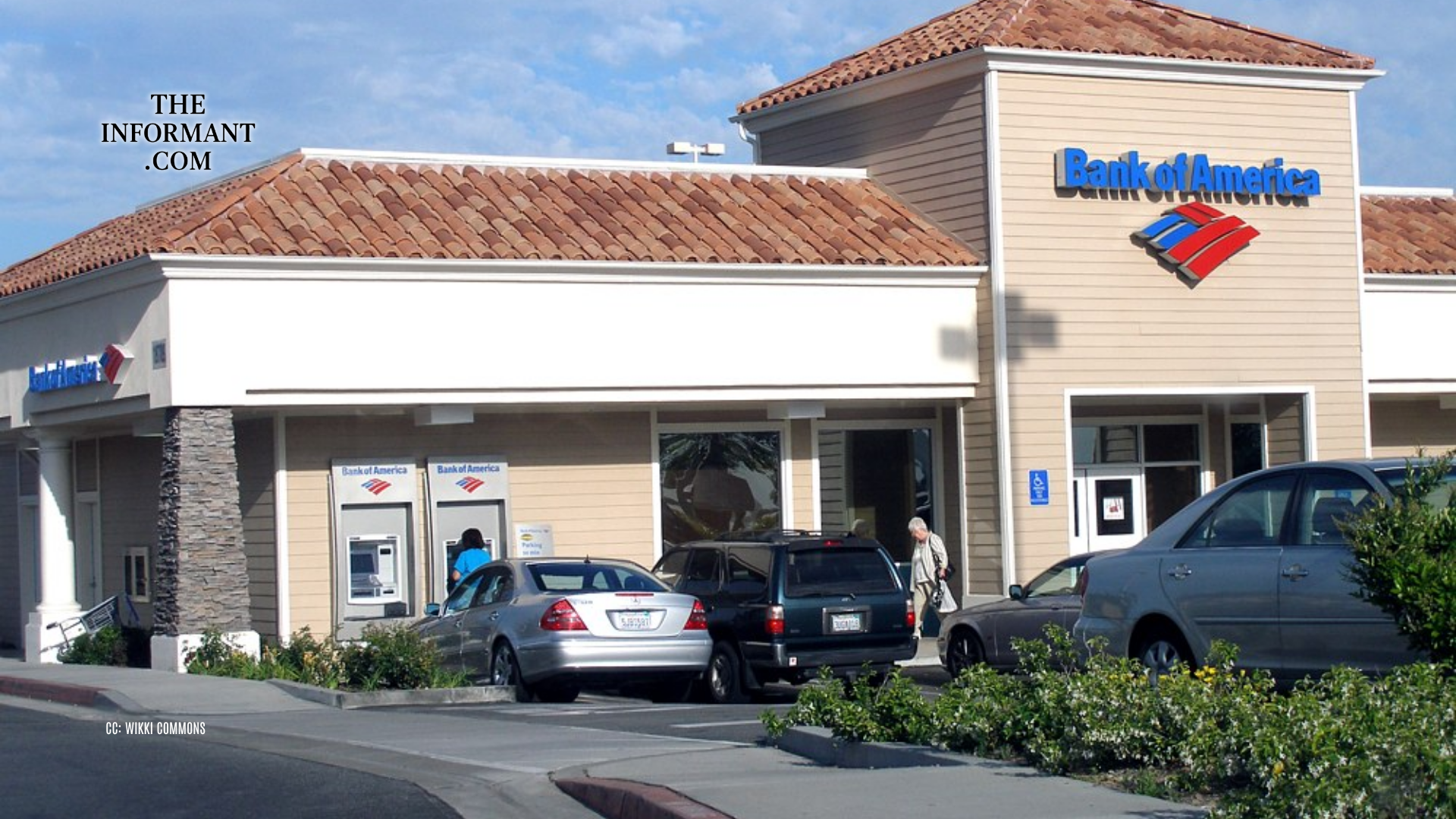
Bank of America reported weaker-than-expected third-quarter earnings Wednesday as slowing capital-markets activity and a major regulatory penalty weighed on one of the largest U.S. banks.
The Charlotte-based lender reported $6.9 billion in net income, or 91 cents per diluted share, for the quarter ended September 30, down from $8.3 billion, or $1.04 per share, a year earlier. Bank of America’s own filing confirms those headline figures.
Excluding a roughly $1.2 billion regulatory settlement charge, the bank earned $1.08 per share, below the $1.10 consensus compiled by LSEG and cited by Reuters. Revenue totaled $30.0 billion.
The weakness was concentrated in capital markets. Sales and trading revenue fell 5% to $5.1 billion, with fixed-income, currencies and commodities under pressure even as equities trading performed better. Investment-banking fees fell 11% to $1.8 billion, broadly in line with management’s earlier warning that deal activity would be softer.
The more consequential development came from regulators. The Treasury Department announced enforcement actions totaling more than $1.21 billion for violations of anti-money-laundering and sanctions rules. FinCEN assessed a $1.2 billion penalty, while the Office of the Comptroller of the Currency imposed a record $750 million civil money penalty that is credited against the FinCEN amount. OFAC separately reached an approximately $11.6 million sanctions settlement.
Regulators said Bank of America failed to properly identify, escalate and report suspicious activity for years. Treasury said the failures involved more than $5 billion in suspicious transactions, including activity tied to Chinese money-laundering networks and illicit finance near the U.S.-Mexico border. The OCC also said some transactions showed indicators of trade-based money laundering and that the bank’s compliance program remained deficient even after a prior enforcement order.
The OCC said Bank of America knew for years that potentially suspicious activity was not always being escalated to investigators for review. It also criticized weaknesses in staffing, training, auditing and internal controls within the bank’s Bank Secrecy Act and anti-money-laundering program.
The bank is already subject to a prior BSA/AML enforcement order and will now face additional remedial requirements, including independent third-party review and further improvements to its monitoring and reporting systems. Bank of America has said it is investing heavily in compliance and will continue working with regulators.
The financial hit arrives at a difficult time for Bank of America’s markets businesses. A prolonged bond-market selloff has pushed yields higher globally, while deal activity has slowed from the strong first half of the year. Dealogic data cited by Reuters showed Bank of America slipping to fourth in global investment-banking league tables for the first nine months of 2026, from third a year earlier.
The bank still showed strength elsewhere. Net interest income rose 8%, consumer banking generated $3.5 billion in net income and wealth-management revenue climbed 13% to $7.1 billion, according to the company’s earnings materials.
For investors, the central issue now extends beyond one quarter’s earnings miss. Bank of America must restore momentum in trading and investment banking while convincing regulators that a compliance program criticized as deficient for years can be rebuilt quickly enough to satisfy one of the toughest enforcement actions in its history.