PARIS, October 19, 2026 — What began as a student movement demanding better classrooms and more teachers has become one of France’s most serious episodes of civil unrest in years. Following a weekend of riots, looting and attacks on public buildings, French authorities have imposed localized curfews as President Emmanuel Macron faces growing questions over his government’s handling of the crisis.
The scale of the unrest has been striking. Approximately 2,400 people were arrested, nearly 1,000 police officers and gendarmes were reported injured, and at least 3,000 businesses were damaged or looted, according to government figures. The disorder followed nationwide demonstrations on Saturday, October 17, that attracted an estimated 550,000 participants according to the Interior Ministry, while the CGT labor union placed attendance at 800,000.
🇫🇷🚨 FRANCE ERUPTS IN MASS PROTESTS! Thousands gather in Paris as demonstrators demand action on rising living costs, fuel prices and public services, with dramatic footage showing smoke and large crowds near Place de la République.#France #Paris #YellowVests #CostOfLiving… pic.twitter.com/HLygMfu7r5
— THE INFORMANT (@TheInformantUSA) October 19, 2026
From Peaceful Demonstrations to Widespread Riots
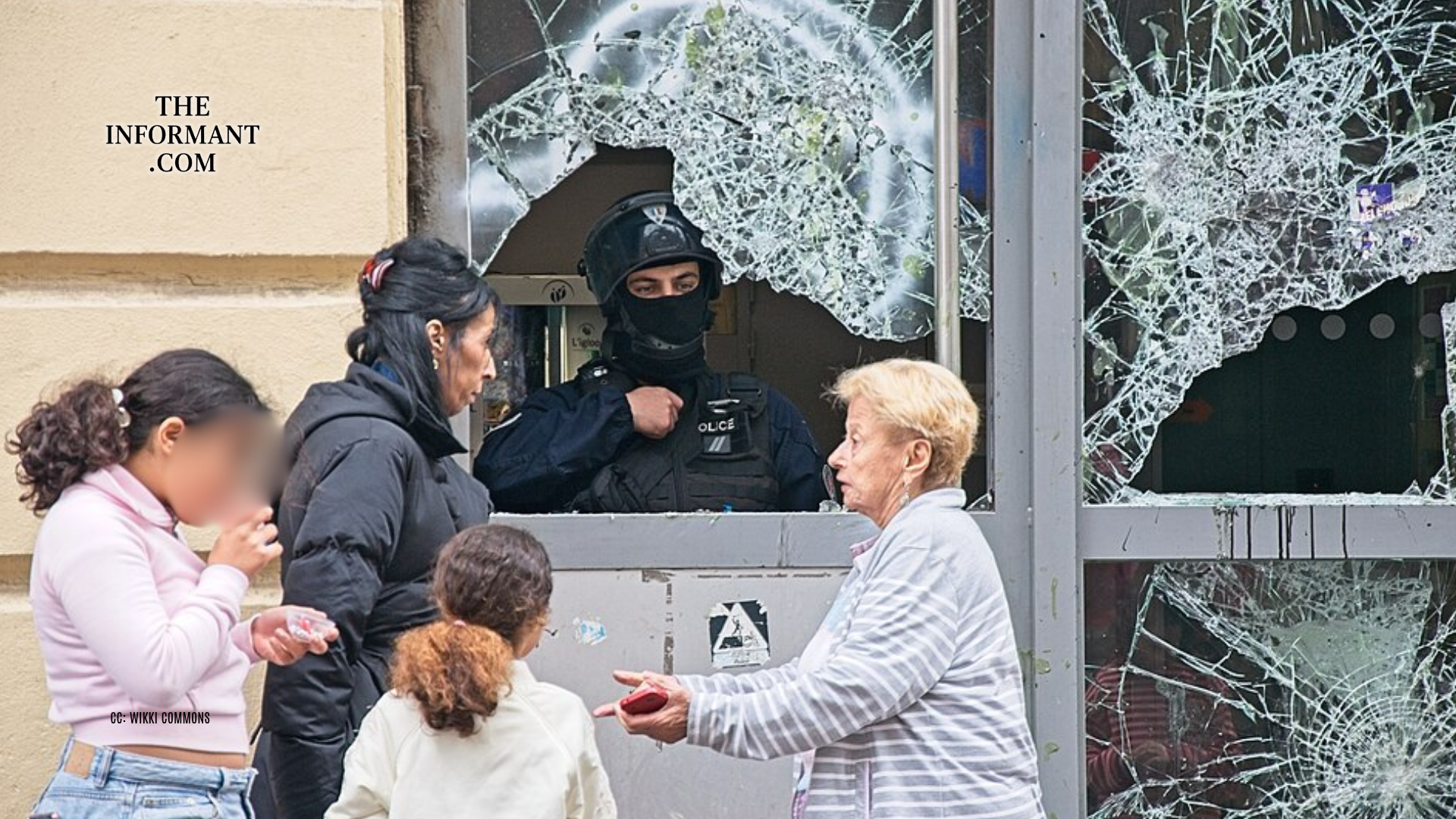
Most demonstrators marched peacefully, demanding action on rising living costs and deteriorating public services. However, violent groups clashed with police, set vehicles ablaze and targeted shops and government buildings in several cities. One of the most dramatic incidents occurred in Limoges, where a fire devastated the historic City Hall, causing significant structural damage and the collapse of much of its roof. Marseille and Lyon also experienced attacks on public facilities.
Authorities additionally reported that one person died following a cardiac arrest during the unrest. The circumstances are being investigated, and the death should not be attributed to violence without further evidence. Separate concerns have emerged over injuries sustained by demonstrators and the methods used by police to disperse violent crowds.
How France’s Student Protests Became a National Movement
The mobilization began in late September at high schools in working-class suburbs north of Paris. Students protested teacher shortages, overcrowded classrooms, deteriorating facilities and inadequate educational support. The movement quickly spread beyond secondary schools, drawing university students, teachers, education unions and other organizations into the demonstrations.
By October 13, the movement had already mobilized between 161,500 and 480,000 demonstrators nationwide, depending on whether figures came from the Interior Ministry or organizers. Its demands had expanded beyond education, bringing together people frustrated by high fuel prices, declining purchasing power, public spending policies and concerns about France’s economic future. Yellow Vest activists, whose movement first emerged in 2018, also joined the broader mobilization.
🥂 Paris is burning, but they’re calmly finishing their drinks
— NEXTA (@nexta_tv) October 19, 2026
Flames can be seen behind them, yet the man and woman keep chatting as if nothing is happening.
The footage was filmed on October 17 during mass protests in Paris. pic.twitter.com/eI7obTaugN
Macron Responds as French Cities Introduce Curfews
In a televised address on October 18, Macron condemned the destruction while acknowledging that peaceful demonstrators had legitimate concerns. The president accused radical far-left groups and criminals of contributing to the violence, although political opponents have challenged the government’s assessment of responsibility. He also demanded a review of policing and intelligence failures after authorities were unable to prevent widespread damage.
The political fallout intensified on Monday when Interior Minister Laurent Nuñez offered his resignation. Macron refused it, arguing that continuity in law enforcement leadership was essential. Prime Minister Sébastien Lecornu subsequently ordered targeted security restrictions. In Paris, overnight curfews were introduced around Place de la République and Les Halles, while authorities in Lyon, Lille, Nice and other locations announced measures tailored to specific neighborhoods or age groups.
Economic Damage and Political Pressure
The government has also announced assistance for affected businesses, including emergency employment-support measures and plans for targeted financial relief. Meanwhile, France’s strained public finances complicate the response to demands for greater investment in schools and public services. The crisis has become another point of confrontation ahead of the 2027 presidential election, in which Macron is constitutionally barred from seeking another consecutive term.
Political leaders remain sharply divided. Far-right figures, including Marine Le Pen, have accused the government of failing to maintain public order, while left-wing leader Jean-Luc Mélenchon has challenged official allegations about the political organizations behind the unrest. With further demonstrations being discussed for October 24 and unions calling for nationwide action on November 5, the central questions are whether authorities can prevent more violence and whether the government can address the grievances that brought hundreds of thousands of people into the streets.
BREAKING:
— Visegrád 24 (@visegrad24) October 9, 2026
The riots are spreading from France to Belgium.
Young second and third-generation migrants have joined forces with Antifa near the central station and are clashing with riot police. pic.twitter.com/i2K4pPfNCc