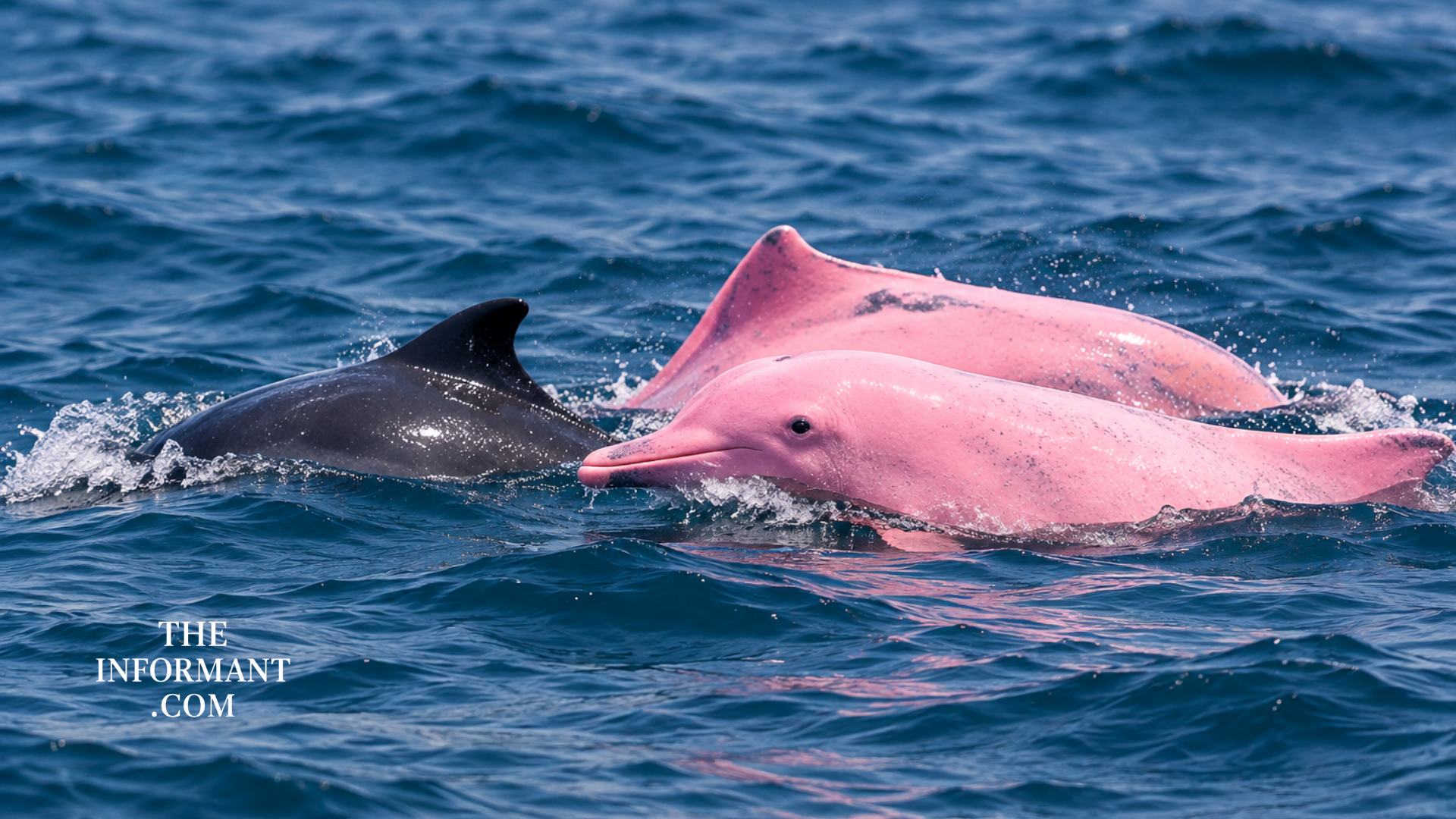
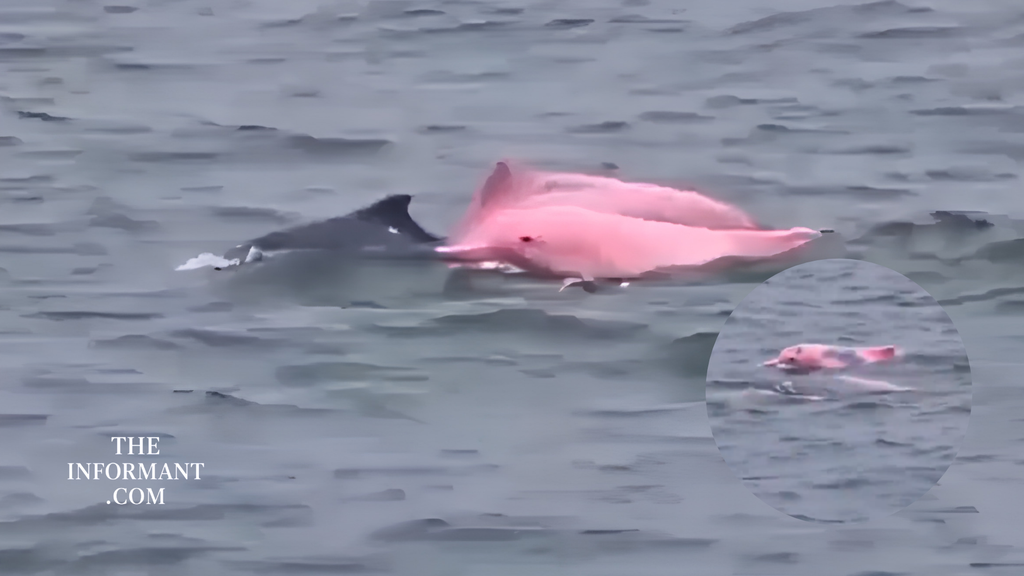
QANTAB, OMAN — October 21, 2026. An unusual marine wildlife sighting has attracted attention after footage reportedly captured near Qantab Beach, along Oman’s coast, showed dolphins with striking pink coloration swimming through the sea. The images, widely shared online, appear to show pink-colored animals surfacing alongside darker dolphins.
The footage has prompted curiosity about the animals’ identity and the reasons behind their distinctive appearance. While pink coloration has been documented in certain marine dolphin populations, the species shown in the Qantab footage has not been independently confirmed.
WHAT DOES THE FOOTAGE SHOW?
The circulating images show at least one visibly pink dolphin surfacing in open water, with darker dolphins appearing nearby. The animals can be seen moving through small waves before submerging again.
The sighting has been associated with Qantab Beach, a coastal destination near Muscat known for marine wildlife and boat excursions. However, the precise recording date, original footage and location have not been independently authenticated.
WHY CAN SOME DOLPHINS APPEAR PINK?
Pink coloration in dolphins can occur for different biological reasons, depending on the species. In some populations, lighter skin pigmentation and blood vessels close to the surface can produce a pinkish appearance, particularly during physical activity.
Coloration may also change with age, while scarring and pigmentation differences can influence the appearance of individual animals. Without detailed examination, it is not possible to determine which factors explain the coloration seen in this particular footage.
WHICH DOLPHIN SPECIES COULD BE INVOLVED?
One possible comparison is the Indo-Pacific humpback dolphin, a coastal marine species known for variations in skin color, including gray and pinkish tones in some populations.
Another possibility raised in discussions is Risso’s dolphin, whose skin can become progressively lighter as scars accumulate over time. However, these possibilities should not be treated as confirmed identifications.
Clearer footage showing body proportions, dorsal fins, head shape and other anatomical characteristics would be needed for a more reliable assessment.
ARE THESE THE SAME AS AMAZON PINK RIVER DOLPHINS?
Despite their similar appearance, pink marine dolphins should not automatically be identified as Amazon river dolphins.
Amazon river dolphins, also known as Inia geoffrensis, inhabit freshwater river systems in South America. They are biologically distinct from marine dolphin species found in the Indian Ocean and other coastal environments.
OMAN’S COAST SUPPORTS DIVERSE MARINE LIFE
Oman’s coastal waters support several dolphin and whale species, making marine wildlife observation an established activity in parts of the country.
The waters near Muscat are visited by dolphins, including spinner and bottlenose dolphins, although the presence of these species does not establish the identity of the animals in the viral footage.
Marine researchers generally rely on physical characteristics, geographic distribution and high-quality photographic evidence to identify dolphins accurately.
WHAT REMAINS TO BE CONFIRMED?
The central unanswered questions concern the species, the cause of the pink coloration and the authenticity of the reported location and date.
For now, the footage offers an intriguing glimpse of unusually colored dolphins reportedly swimming off Oman’s coast. A definitive identification would require additional documentation or confirmation from qualified marine wildlife specialists.