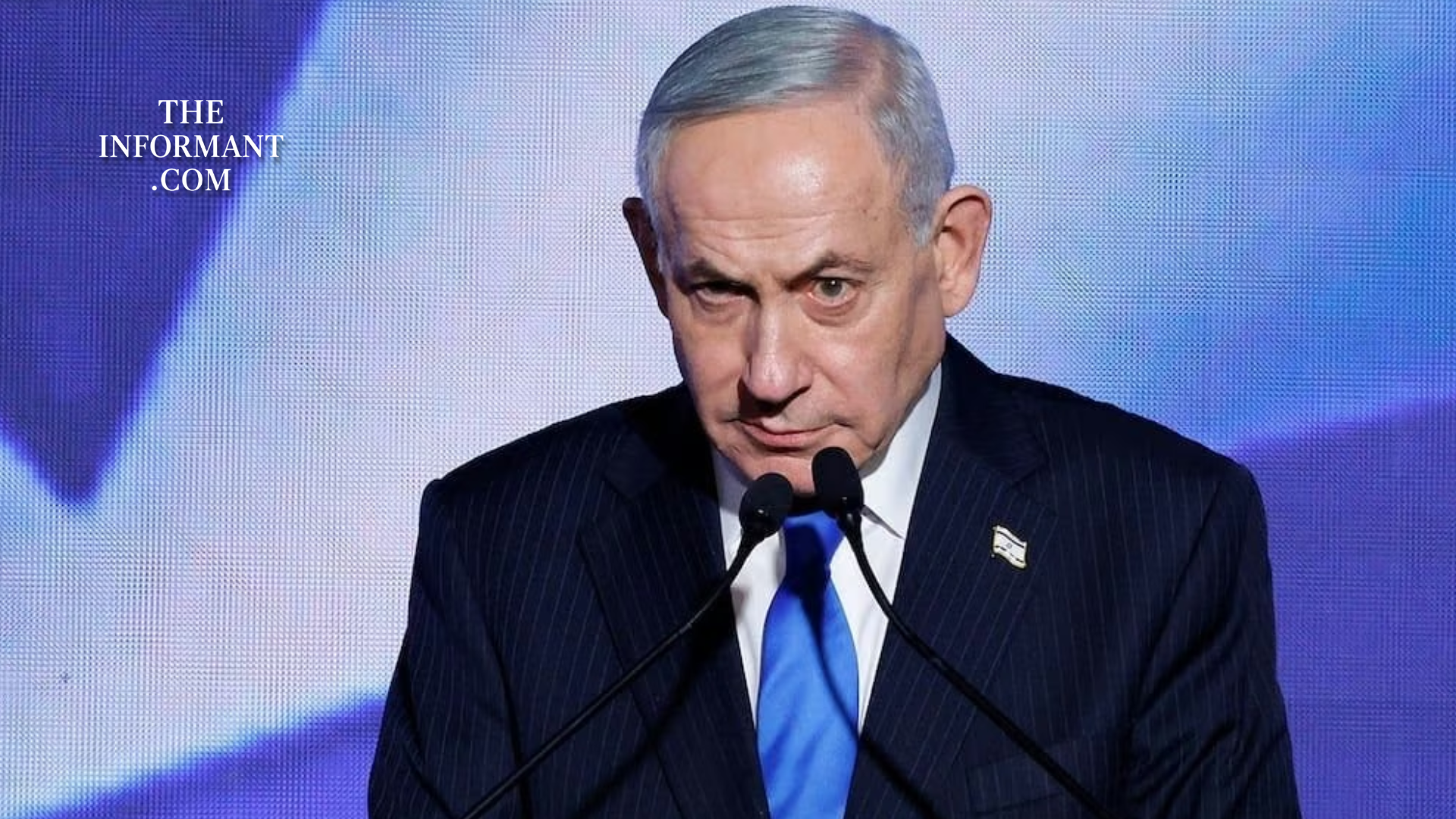
JERUSALEM — November 4, 2026. Israeli Prime Minister Benjamin Netanyahu has lost his parliamentary majority following the official certification of Israel’s October 27 election results. His right-wing and religious coalition secured 53 seats in the 120-member Knesset, falling eight seats short of the 61 required to command a majority.
FINAL RESULTS CONFIRM NETANYAHU’S SETBACK
The Central Elections Committee approved the election results on November 4, confirming the distribution announced after ballot counting concluded last week.
Netanyahu’s political bloc won 53 seats, compared with 48 for the main opposition parties and 19 for Arab-led parties.
His Likud party remains the largest individual party, winning 27 seats. However, neither Netanyahu’s allies nor the principal opposition bloc secured enough seats to govern independently.
ARAB-LED PARTIES ACHIEVE HISTORIC GAINS
One of the election’s most significant developments was the increased representation of Arab-led parties.
The Joint List secured 11 seats, while Ra’am won eight, bringing their combined total to a record 19 seats.
Their representation could prove important in determining the next government, although the parties have different political positions and potential coalition arrangements remain uncertain.
NETANYAHU REMAINS PRIME MINISTER DURING NEGOTIATIONS
Despite losing his parliamentary majority, Netanyahu has not automatically been removed from office.
He remains prime minister while Israel’s political parties negotiate the formation of a new government.
President Isaac Herzog will consult parliamentary factions before assigning a candidate the responsibility of attempting to assemble a governing coalition.
Opposition leader Gadi Eisenkot and his allies also face difficult negotiations because their bloc holds only 48 seats.
ELECTION OFFICIALS REJECT CLAIMS OF SYSTEMATIC FRAUD
The certification follows allegations raised by Netanyahu and members of his political camp about possible election interference.
Israel’s election authorities reported that their review found no irregularities capable of changing the outcome.
President Herzog accepted the certified results as legally binding and warned against undermining public confidence in the electoral process without evidence.
COALITION DEADLOCK COULD LEAD TO ANOTHER ELECTION
The new Knesset is scheduled to convene on November 10.
Political parties must now determine whether they can form a majority through negotiations, cross-bloc agreements or other parliamentary arrangements.
If those efforts fail, Israel could face another election in early 2027.
For now, the certified results confirm a major political setback for Netanyahu, but they do not establish who will lead Israel’s next government.