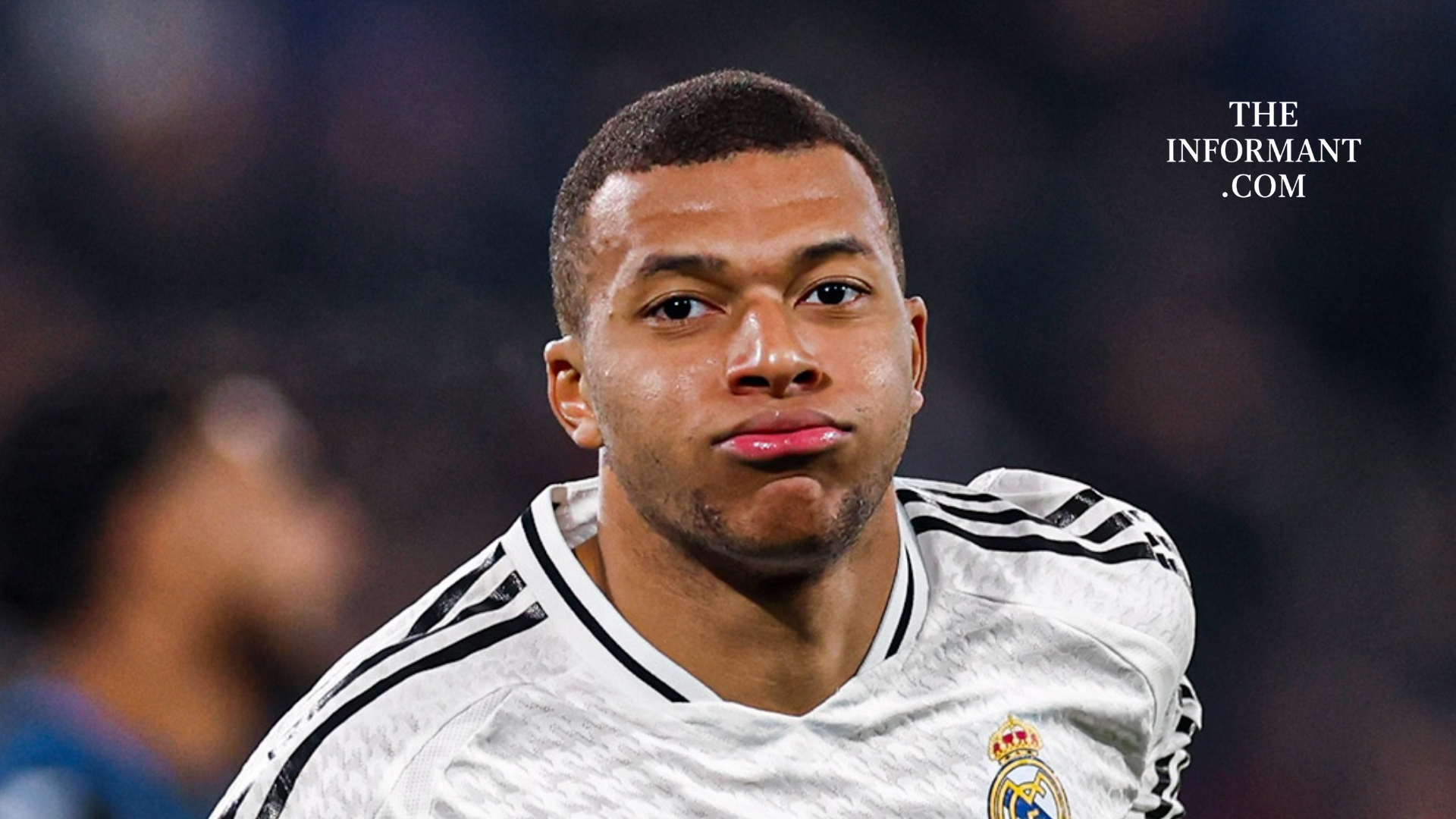
BEIJING, China — October 28, 2026. French soccer superstar Kylian Mbappé has lost sponsorship agreements with at least three Chinese companies after a viral video appeared to show him joking about a digitally altered image of himself resembling Mao Zedong, the founding leader of the People’s Republic of China.
The Real Madrid forward apologized on October 27 as the controversy spread across Chinese social media. Beverage company Dongpeng, dairy producer Mengniu and cheese manufacturer Milkground announced that they were ending their commercial relationships with the 27-year-old player.
VIRAL VIDEO SPARKS CONTROVERSY OVER MAO ZEDONG MEME
The controversy began after a video circulated online showing what appeared to be Mbappé participating in an interview associated with the French-language program The Bridge.
In the clip, the soccer star was asked about his favorite internet meme featuring himself.
He appeared to describe an edited image in which his face had been placed on the body of a historical figure whom he believed was a Chinese dictator.
The image shown in the video resembled Mao Zedong, who led the founding of the People’s Republic of China in 1949 and remained its central political figure until his death in 1976.
Reuters and AFP initially reported that they could not independently authenticate the circulating video.
The controversy nevertheless prompted official corporate responses and a subsequent public apology from Mbappé.
THREE CHINESE COMPANIES TERMINATE SPONSORSHIP DEALS
Dongpeng Beverage Group was among the first companies to announce that it would end its commercial relationship with Mbappé.
The company said it opposed conduct that offended Chinese national sentiment and was immediately terminating its cooperation with the player.
Mengniu, one of China’s largest dairy companies, issued a similar announcement.
Milkground, a Chinese dairy and cheese producer, also confirmed that it was ending its agreement with the French international.
The companies did not publicly disclose the financial value of the canceled contracts.
Their decisions represent a commercial setback for Mbappé, whose image has appeared in advertisements across China.
MBAPPÉ ISSUES PUBLIC APOLOGY
Following the backlash, Mbappé released a statement expressing regret over his remarks.
The French captain acknowledged that his comments had upset people in China and members of Chinese communities around the world.
He said his words had been poorly judged and that causing offense had not been his intention.
Mbappé also expressed respect for the Chinese people and their history.
The apology marked his first public response to the controversy and came after several sponsors had already announced their decisions.
It remains unclear whether the statement will lead any of the companies to reconsider their partnerships.
CHINESE STATE BROADCASTER SUSPENDS LALIGA COVERAGE
The controversy extended beyond sponsorship agreements.
China Media Group, the country’s state broadcasting organization, announced that it was suspending coverage of Spanish LaLiga matches and other games involving Mbappé.
The broadcaster also removed advertisements featuring the player.
The move raised concerns about the potential consequences for Spanish soccer’s commercial presence in China.
LaLiga has spent years developing its international audience, including partnerships and broadcast arrangements in Asian markets.
A prolonged suspension could affect Chinese viewers’ access to matches involving Real Madrid and other Spanish clubs.
LALIGA RESPONDS TO THE CONTROVERSY
LaLiga issued a statement expressing regret over the offense caused by Mbappé’s comments.
The league emphasized that the player’s remarks were personal and did not represent its institutional position.
LaLiga also announced plans to improve communication and cultural awareness measures involving players and clubs.
League president Javier Tebas reportedly met with China’s ambassador to Spain as officials sought to preserve relations with Chinese soccer fans.
The response illustrates how controversies involving individual athletes can affect sports organizations and their international business relationships.
CHINESE SOCIAL MEDIA USERS REACT TO COMMENTS
The video generated widespread discussion on Chinese social media platform Weibo.
Topics related to Dongpeng’s decision and the termination of Mbappé’s sponsorship agreements rose to the platform’s trending lists.
Some users criticized the player and called for a boycott, while others focused on the commercial consequences of his remarks.
Chinese sports platform Dongqiudi also criticized the comments.
The reactions reflected the sensitivity surrounding public references to Mao Zedong in China, where he remains a central figure in the country’s official historical narrative.
WHY MAO ZEDONG REMAINS A SENSITIVE FIGURE IN CHINA
Mao Zedong led the Chinese Communist Party to victory in the country’s civil war and established the People’s Republic of China in 1949.
He remains an important symbol of the Chinese state, and his portrait appears prominently in Beijing’s Tiananmen Square.
His legacy is also the subject of extensive historical debate, particularly concerning the Great Leap Forward, the Cultural Revolution and the political repression associated with his leadership.
Public satire involving Mao can generate strong reactions in China, where political expression is subject to government restrictions.
Mbappé’s apparent reference to Mao as a dictator became controversial within that political and cultural context.
CONTROVERSY HIGHLIGHTS COMMERCIAL RISKS FOR GLOBAL ATHLETES
Mbappé is among the world’s most recognizable soccer players and has represented major international brands.
His commercial relationships extend beyond European markets, making international sponsorship agreements an important part of his business profile.
The latest controversy demonstrates how public statements by globally recognized athletes can affect advertising campaigns and relationships with corporate partners.
China represents a substantial market for international sports, consumer brands and entertainment companies.
For businesses operating there, controversies involving politically sensitive subjects can result in rapid changes to commercial partnerships.
WHAT HAPPENS NEXT?
Mbappé has apologized, but the immediate commercial consequences are already significant.
At least three Chinese companies have announced the termination of their partnerships, and state broadcaster China Media Group has suspended coverage involving the player.
It remains uncertain whether the broadcast restrictions will be lifted or whether the canceled sponsorship agreements could eventually be restored.
Real Madrid and LaLiga may also face additional questions about their relationships with Chinese commercial partners.
For now, the controversy illustrates the intersection of international sports, political expression and the commercial influence of the Chinese market.