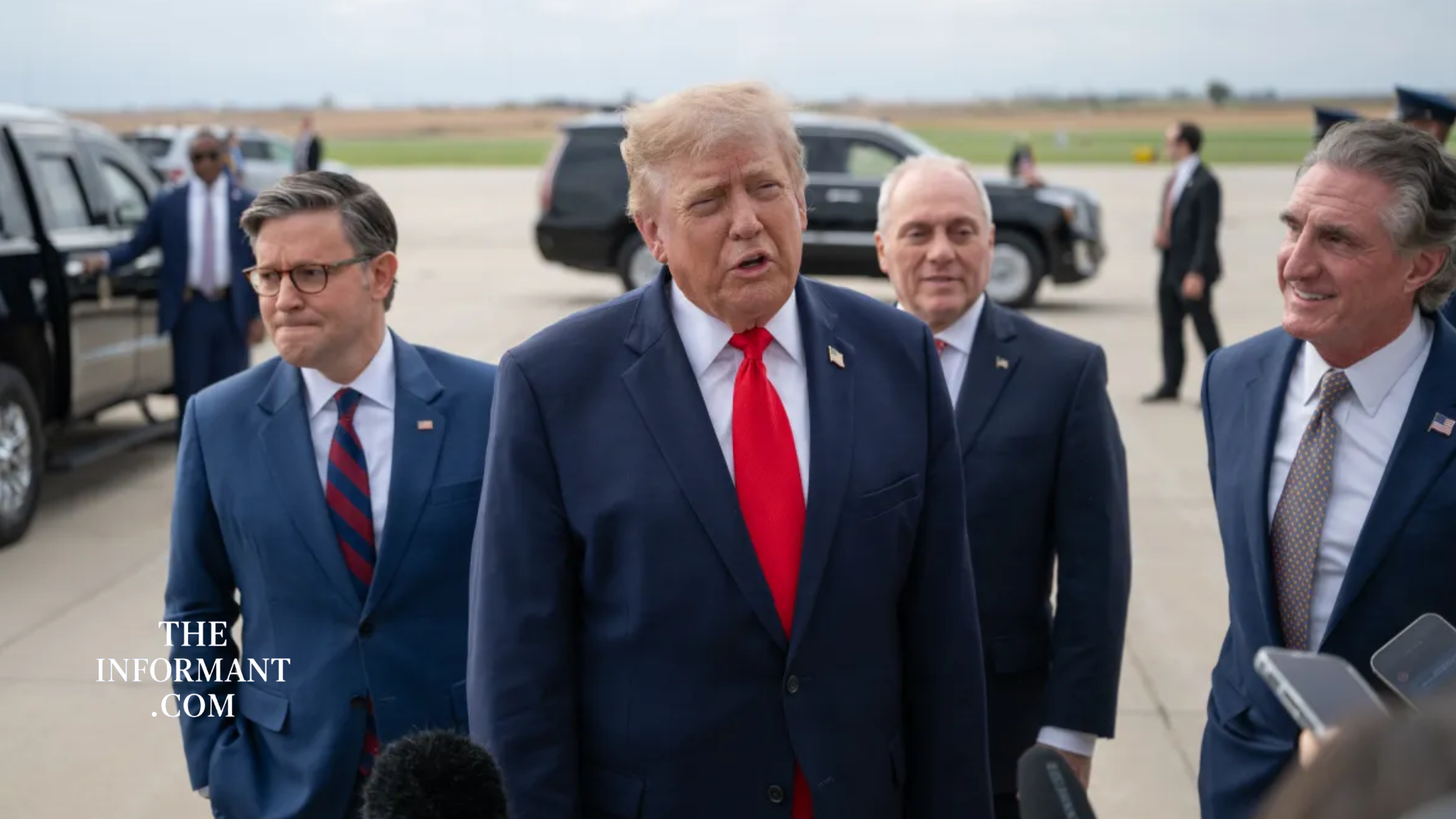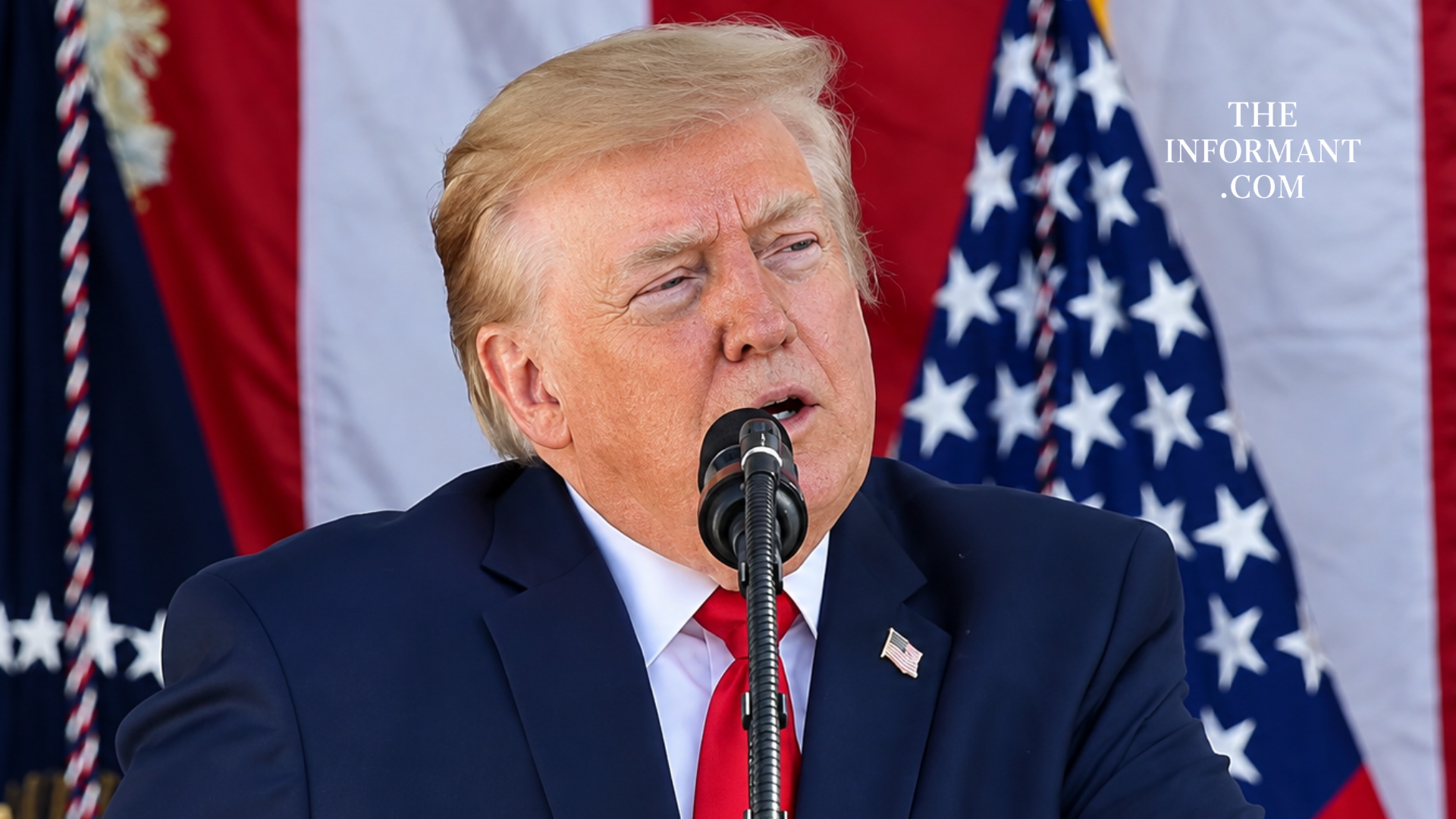
ARLINGTON, VIRGINIA — November 12, 2026. President Donald Trump used his Veterans Day address at Arlington National Cemetery on Wednesday to highlight his administration’s record on veterans’ benefits, housing assistance and mortgage protections. Speaking during the annual ceremony honoring Americans who served in the U.S. Armed Forces, Trump said his administration had reduced the Department of Veterans Affairs disability claims backlog by 71%, enacted legislation designed to help veterans avoid foreclosure and secured housing for nearly 100,000 veterans experiencing homelessness. Federal agency data support several of the numerical claims, although the president’s assertion that he has done more for veterans than any other modern president remains a political assessment rather than an independently established historical conclusion.
TRUMP HIGHLIGHTS VETERANS’ BENEFITS DURING ARLINGTON ADDRESS
The president delivered his remarks on November 11 during the National Veterans Day Observance at Arlington National Cemetery, where senior government officials, military representatives and veterans gathered to recognize generations of American service members. After discussing the nation’s military history and the responsibility to support those who served, Trump turned to his administration’s work at the Department of Veterans Affairs. He emphasized disability compensation, mortgage assistance and housing programs as examples of efforts intended to improve veterans’ lives after military service.
Trump described his record in sweeping historical terms, claiming that his administration had accomplished more for veterans than any other modern presidency. That comparison is difficult to establish through a single set of statistics because different administrations have overseen changes in healthcare access, educational benefits, disability compensation, housing and other services. The specific figures cited in the speech can be assessed against federal agency records, but they do not independently prove the broader comparison with previous presidents.
VA REPORTS MAJOR REDUCTION IN DISABILITY CLAIMS BACKLOG
One of Trump’s central claims concerned the number of veterans waiting for decisions on disability compensation and pension applications. During the speech, he cited a 71% reduction in the claims backlog. The Department of Veterans Affairs has separately reported a reduction of approximately 70% or more since January 20, 2025, although the precise percentage has varied depending on the reporting date. The department defines a backlogged compensation or pension claim as one that has remained pending for more than 125 days.
According to VA data published in July 2026, the backlog had fallen below 70,000 claims for the first time since February 2020. The department reported that the number of pending claims older than 125 days had declined substantially from the level recorded when Trump began his second term. The figures indicate a significant reduction in long-pending applications, although they do not mean that all disability claims have been completed or that every veteran receives a decision within the same period.
.@POTUS: I am proud to have done more to improve care for America’s veterans than any president in modern history… We cut the VA claims backlog by nearly 70%; I signed the VA Home Loan Reform Act so that no veteran loses their home to foreclosure; we have secured housing for… pic.twitter.com/vvuRTUsGcd
— Rapid Response 47 (@RapidResponse47) November 11, 2026
PROCESSING TIMES FALL AS VA COMPLETES RECORD NUMBER OF CLAIMS
The VA has also reported improvements in the average time required to process disability benefit claims. In July, the department said the average processing time had reached approximately 77.7 days, compared with 141.5 days in January 2025. By September, the department reported an average of 75.6 days, reflecting a substantial reduction in the time veterans typically waited for a decision. These figures represent averages across claims and should not be interpreted as guaranteed processing deadlines for individual applicants.
In fiscal year 2026, the department processed approximately 3.11 million disability compensation claims, exceeding the previous fiscal year’s record of about 3 million. VA officials reported that the agency maintained an accuracy rate near 94% while handling the increased workload. The figures provide measurable evidence of higher processing volume and shorter average waits, although assessments of overall service quality must also consider appeals, case complexity and the experiences of veterans whose applications remain unresolved.
VA HOME LOAN REFORM ACT CREATES NEW FORECLOSURE PREVENTION OPTION
Trump also highlighted the VA Home Loan Program Reform Act, which he signed into law on July 30, 2025. The legislation authorized a Partial Claim Program designed to help eligible veterans with VA-guaranteed mortgages who have fallen behind on payments or face an imminent risk of default. Under the program, the VA can cover a qualifying portion of overdue mortgage debt, allowing the borrower to bring the loan current while creating a separate repayment obligation that generally becomes due when the property is sold, refinanced or the mortgage is paid off.
The VA formally launched the Partial Claim Program on June 15, 2026. Borrowers generally must work with their mortgage servicers and complete a three-month trial payment plan before receiving assistance. The law provides an additional option to prevent foreclosure, but it does not eliminate every possibility of a veteran losing a home. Eligibility restrictions, servicing requirements and the borrower’s financial circumstances still determine whether the program can provide relief in an individual case.
FEDERAL WATCHDOG IDENTIFIES CHALLENGES IN MORTGAGE PROGRAM OVERSIGHT
The Government Accountability Office released a report on November 10, 2026, examining implementation of the VA Partial Claim Program. The federal watchdog acknowledged that the department had taken steps to establish policies, train participating organizations and prepare systems for the new foreclosure prevention option. However, the report found that the VA had not yet developed a comprehensive plan to evaluate the program’s effectiveness, raising questions about how Congress and the public would measure its results.
The GAO recommended that the department establish a more complete evaluation framework. This finding does not negate the existence of the program or its potential benefits, but it highlights the difference between creating a mortgage assistance mechanism and demonstrating how many foreclosures it actually prevents. Mortgage servicers also have until November 28, 2026, to complete implementation requirements, meaning the program is still progressing toward full operational availability.
TRUMP SAYS NEARLY 100,000 HOMELESS VETERANS HAVE RECEIVED HOUSING
During his speech, Trump said his administration had secured housing for nearly 100,000 veterans who had experienced homelessness. Department of Veterans Affairs figures released ahead of Veterans Day reported that more than 95,000 veterans were housed during fiscal years 2025 and 2026. The department separately documented 51,936 veterans placed in permanent housing during fiscal year 2025, describing that result as the highest annual total in seven years.
These numbers reflect housing placements reported through federal veterans’ assistance programs. They should not be interpreted as proof that homelessness among veterans has been eliminated or that every person assisted has remained permanently housed. Veterans can face continuing difficulties involving affordability, employment, health conditions and access to support services. Evaluating the long-term impact of housing initiatives requires tracking both successful placements and the number of veterans who subsequently return to homelessness.
VA EXPANDS HEALTHCARE ACCESS AND SUPPORT SERVICES
The administration has also pointed to other developments within the VA, including expanded healthcare enrollment, additional clinics and increased medical appointment capacity. In a November 2026 summary, the department reported that more than 330,000 new veterans enrolled in VA healthcare during the year. It also cited approximately 82.7 million direct care appointments and 68.1 million community care appointments in fiscal year 2026, along with 47 new healthcare clinics opened since January 2025.
The VA reported that it invested nearly $5 billion in fiscal year 2026 to modernize and repair healthcare facilities. These figures describe the scale of federal services and investments, but they do not by themselves establish how veterans rate the care they receive or whether access has improved equally across different regions. Rural communities, veterans with complex medical needs and people requiring specialized treatment may experience different outcomes, making continued performance monitoring important.
WHAT THE NUMBERS SHOW — AND WHAT REMAINS UNCERTAIN
The available federal records support the administration’s central numerical statements that the disability claims backlog has fallen sharply, that the VA processed a record number of claims in fiscal year 2026 and that more than 95,000 veterans were housed over two fiscal years. The mortgage reform law is also in effect, and the Partial Claim Program offers an additional way for qualifying borrowers to address missed payments. These developments are measurable and can be documented through agency publications and federal legislation.
Other parts of the president’s remarks require more careful interpretation. The claim that no veteran will lose a home to foreclosure goes beyond what the mortgage program guarantees, while the assertion that his record surpasses every modern president is a political comparison that requires a broader historical evaluation. Similarly, the housing total measures placements rather than a complete or permanent resolution of veteran homelessness. Distinguishing these categories allows readers to understand both the administration’s reported accomplishments and the limits of the available evidence.
VETERANS DAY REMARKS PUT FEDERAL BENEFITS UNDER SPOTLIGHT
Trump’s Veterans Day address brought renewed attention to the federal government’s responsibility to support former service members through healthcare, disability benefits, housing and financial assistance. The speech combined tributes to military service with a defense of the administration’s record, placing specific numerical claims at the center of its message. The VA’s published data provide important context for evaluating those statements, particularly the improvements in claims processing and reported housing placements.
The next measures of progress will include whether disability claim processing remains timely, whether veterans can consistently access medical services and whether the Partial Claim Program demonstrably prevents foreclosures. Housing programs will also need to show that veterans who receive assistance can maintain stable living arrangements. Those outcomes, rather than the speech’s historical comparisons alone, will provide a clearer picture of the long-term effects of federal veterans’ policies.