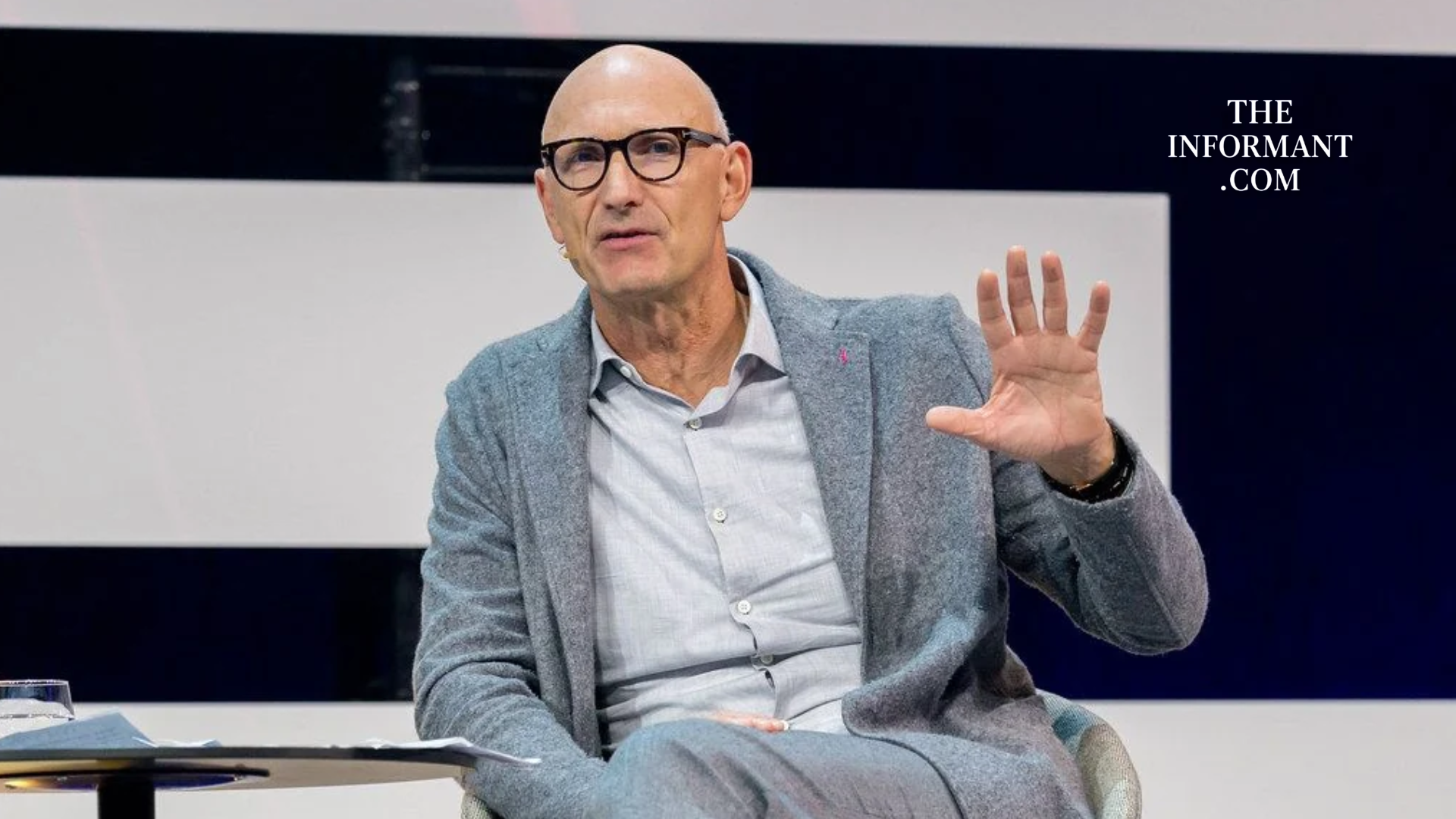
BONN, GERMANY — November 6, 2026. Elon Musk’s SpaceX could need at least €200 billion, approximately $225 billion, to become a major competitor in the United States wireless market, according to Deutsche Telekom CEO Tim Höttges. During the company’s November 5 third-quarter earnings call, the executive outlined the financial and technological obstacles facing Starlink Mobile as it seeks to challenge established operators such as T-Mobile, AT&T and Verizon.
SPACEX FACES A MULTIBILLION-DOLLAR CHALLENGE
Höttges argued that building a competitive nationwide mobile network requires far more than launching satellites.
The executive estimated that SpaceX would need at least €200 billion to acquire additional wireless spectrum, develop terrestrial infrastructure and compete with established mobile operators.
The figure represents Höttges’s assessment of the investment needed, not an announced SpaceX budget or an independently calculated construction cost.
Despite his concerns about the company’s ability to compete economically, Höttges said Deutsche Telekom was taking Musk’s ambitions seriously.
76 MHZ VERSUS 400 MHZ OF SPECTRUM
One of the executive’s central arguments involved the amount of wireless spectrum available to each company.
According to Höttges, SpaceX has acquired approximately 76 megahertz of spectrum, compared with roughly 400 megahertz held by T-Mobile.
Wireless spectrum is essential for carrying mobile data and supporting network capacity.
Höttges argued that acquiring enough additional frequencies to approach the scale of established operators could require hundreds of billions in investment.
However, spectrum holdings cannot be compared solely by their total bandwidth because frequency bands, geographic licenses and network technologies affect their practical value.
T-MOBILE’S 85,000 TOWERS PRESENT ANOTHER OBSTACLE
The Deutsche Telekom chief also highlighted the extensive infrastructure supporting T-Mobile’s wireless network.
He cited approximately 85,000 tower sites and argued that SpaceX would need to lease existing infrastructure or develop its own terrestrial network.
According to his estimate, tower access alone could require an additional €20 billion to €30 billion, before accounting for other equipment and network deployment costs.
The executive suggested that acquiring an existing wireless business could be a more practical alternative to constructing an entirely new network.
WHY SATELLITES CANNOT FULLY REPLACE CELL TOWERS
SpaceX’s Starlink network uses satellites in low Earth orbit to deliver connectivity across large geographic areas.
Its direct-to-cell technology aims to connect compatible smartphones without relying exclusively on conventional cell towers.
However, Höttges argued that satellite signals face significant limitations, particularly inside buildings and in densely populated urban environments.
Terrestrial mobile networks use antennas positioned much closer to consumers, allowing operators to provide greater capacity and more reliable indoor coverage.
For that reason, he believes SpaceX will need a combination of satellite and ground-based infrastructure to compete nationally.
STARLINK MOBILE COULD CHANGE THE COMPETITIVE LANDSCAPE
SpaceX has outlined plans for Starlink Mobile, a service combining satellite connectivity with terrestrial cellular infrastructure.
The company has explored technologies and partnerships that could help it establish a larger presence in the U.S. wireless market.
Industry reporting also indicates that Qualcomm is expected to provide cellular technology for the proposed network.
Although SpaceX has not demonstrated that it can match established nationwide carriers, its entry could create additional competition in coverage, pricing and communications services.
DEUTSCHE TELEKOM TAKES MUSK’S AMBITIONS SERIOUSLY
Höttges acknowledged that SpaceX could develop a different business model by combining satellite communications, artificial intelligence, data centers and other technologies.
He suggested that established telecommunications companies should not underestimate the possibility of a new type of communications provider.
Deutsche Telekom also recognizes the potential impact of a fourth major U.S. wireless competitor on profitability and investor expectations.
T-Mobile has already partnered with Starlink on direct-to-cell services, illustrating that the two companies can cooperate technologically while potentially becoming competitors in other areas.
WHAT HAPPENS NEXT?
SpaceX has not announced a commitment to invest €200 billion in a nationwide U.S. mobile network.
Its future strategy could involve building infrastructure, leasing tower capacity, acquiring an existing operator or expanding partnerships.
The actual cost and competitive impact will depend on spectrum availability, regulatory approvals, technology deployment and consumer adoption.
For now, Höttges’s remarks highlight the enormous financial barriers facing any company seeking to challenge America’s established wireless giants.