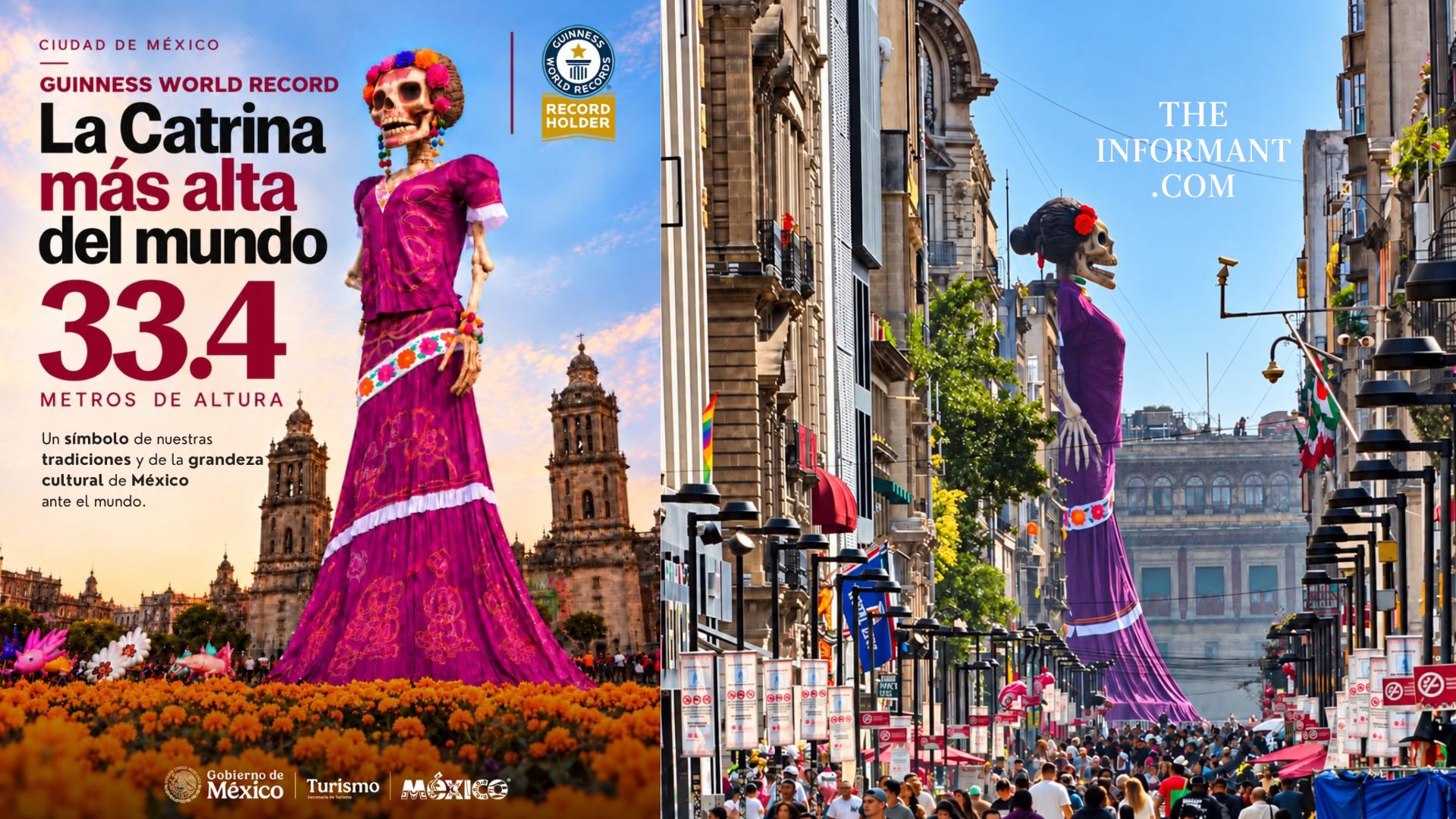
MEXICO CITY — October 30, 2026. Mexico City is celebrating Día de Muertos with a monumental attraction in its historic Zócalo: a 33.4-meter-tall Catrina, approximately 109.6 feet high, presented as the world’s tallest and recognized by Guinness World Records. The towering figure is the centerpiece of the capital’s Monumental Day of the Dead Offering, drawing attention to one of Mexico’s most recognizable cultural traditions.
A RECORD-BREAKING CATRINA IN THE HEART OF MEXICO CITY
The giant skeletal figure rises above the Zócalo, surrounded by elaborate seasonal decorations, thousands of orange marigolds and traditional Mexican artwork.
Inspired by the iconic La Calavera Garbancera created by Mexican artist José Guadalupe Posada, the Catrina represents a cultural symbol closely associated with Mexico’s Day of the Dead celebrations.
The monumental display brings together artistic craftsmanship and traditional imagery, creating a public installation designed to celebrate Mexican identity and honor the memory of loved ones who have died.
MORE THAN 70,000 MARIGOLDS AND TRADITIONAL ART
The installation features more than 70,000 cempasúchil flowers, also known as Mexican marigolds, which play a central role in Día de Muertos traditions.
Their vibrant orange and yellow colors are traditionally associated with guiding the spirits of deceased loved ones toward family offerings.
The display also incorporates colorful representations of axolotls, decorative lighting and examples of Mexican folk art, combining regional cultural elements with the visual spectacle of the monumental Catrina.
THE CULTURAL MEANING BEHIND LA CATRINA
La Catrina has become one of the most internationally recognized symbols of Día de Muertos.
Its origins can be traced to Posada’s early 20th-century satirical illustration, which depicted a skeleton wearing an elegant European-style hat. The image later became closely associated with Mexican cultural identity through the work of muralist Diego Rivera.
Today, Catrina figures appear in parades, artwork, costumes and public installations throughout Mexico, representing both remembrance and the country’s distinctive artistic approach to mortality.
A FREE CELEBRATION FOR FAMILIES AND VISITORS
The monumental installation is open to the public at Mexico City’s Zócalo, one of the country’s most important historic and cultural gathering places.
Visitors can explore the decorations, photograph the towering Catrina and experience the artistic elements of the Day of the Dead offering without paying an admission fee.
The exhibition is scheduled to remain available through November 2, 2026, coinciding with the traditional observance of Día de Muertos.
DAY OF THE DEAD: A TRADITION OF MEMORY AND IDENTITY
Día de Muertos is observed primarily on November 1 and 2, when families honor deceased relatives and friends through altars, flowers, candles, photographs and favorite foods.
The tradition combines Indigenous Mexican practices with Catholic influences and was inscribed by UNESCO on its Representative List of the Intangible Cultural Heritage of Humanity in 2008.
The celebration is not simply a festival about death, but a cultural expression of remembrance, family connections and continuity between generations.
MEXICO CITY SHOWCASES ITS CULTURAL HERITAGE
With its record-setting height and elaborate decorations, the monumental Catrina highlights the scale and creativity of Mexico City’s Día de Muertos celebrations.
The installation also serves as a tourism attraction, inviting domestic and international visitors to experience Mexican traditions through public art and community participation.
Residents and tourists have until November 2 to visit the free exhibition in the heart of Mexico’s capital.