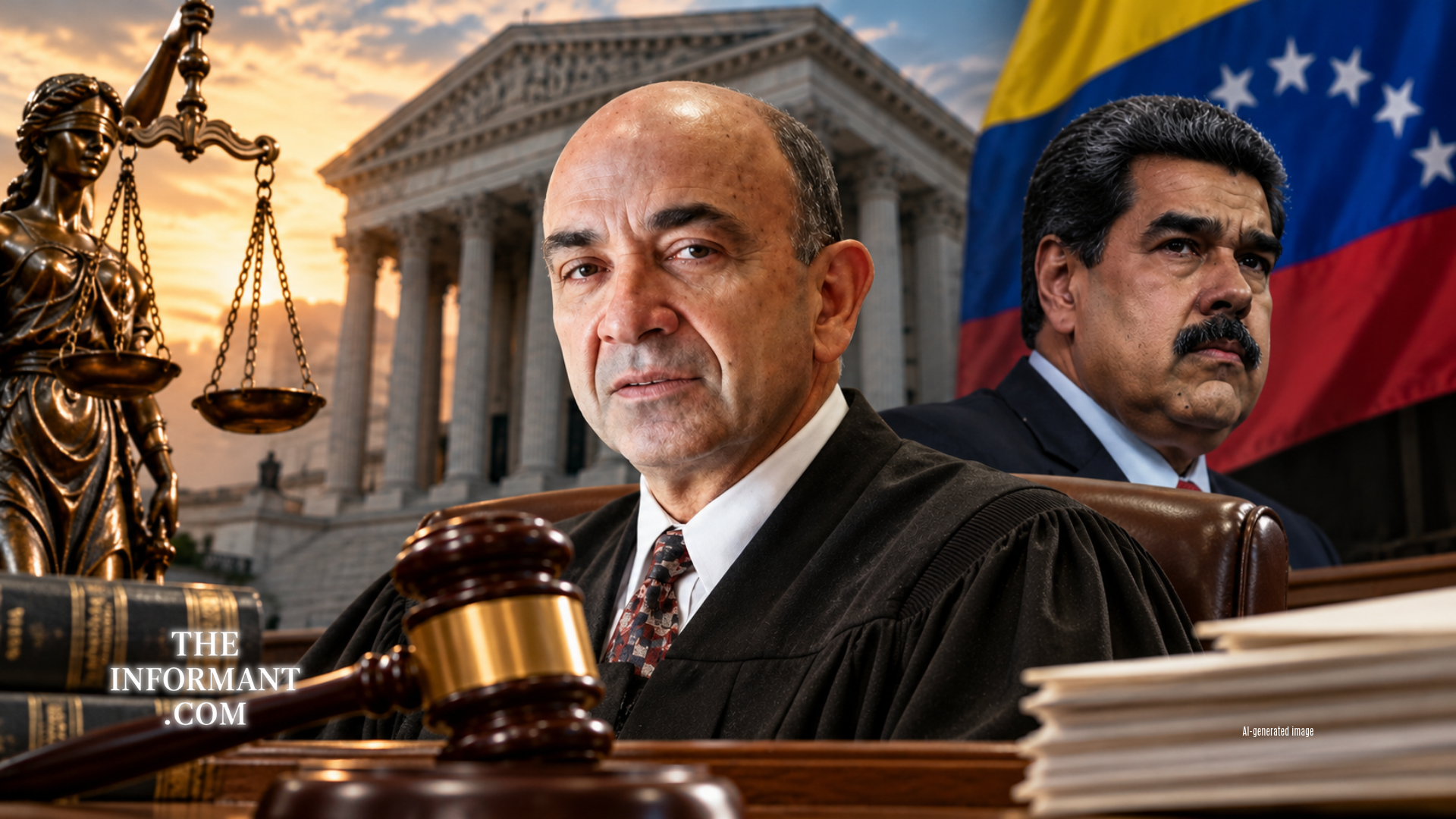
NEW YORK — October 28, 2026. Alvin K. Hellerstein, the veteran federal judge overseeing the prosecution of former Venezuelan President Nicolás Maduro and his wife, Cilia Flores, has died at age 92. His death leaves one of the most closely watched international criminal cases in the United States awaiting a new judge, raising immediate questions about the future schedule of proceedings involving allegations of narcoterrorism, drug trafficking and torture.
The Southern District of New York confirmed Hellerstein’s death Wednesday through court official Edward Friedland. Chief Judge Laura Taylor Swain said the longtime jurist died surrounded by family and recognized his nearly three decades of judicial service. Court officials indicated that his pending cases, including the Maduro prosecution, would be reassigned to other federal judges through the court’s regular assignment procedures.
MADURO AND CILIA FLORES WILL FACE A NEW FEDERAL JUDGE
Hellerstein had presided over proceedings connected to the Maduro prosecution, including hearings following the former Venezuelan leader’s capture by U.S. forces in January 2026. Maduro and Flores were brought to New York to face federal charges and have pleaded not guilty.
On October 15, Hellerstein oversaw another hearing after prosecutors expanded the indictment to include allegations involving the torture of political opponents and detainees, including Americans. The defendants rejected the new charges, and Hellerstein established an updated schedule for the proceedings.
WHAT HAPPENS TO MADURO’S TRIAL AFTER HELLERSTEIN’S DEATH?
The judge’s death does not automatically dismiss the criminal case or invalidate earlier court proceedings. A newly assigned judge will inherit the litigation and determine whether existing deadlines and hearing dates should remain in place.
The latest reported schedule sets the next oral-argument hearing for December 17, 2026, with trial scheduled to begin June 14, 2027. Those dates were established before Hellerstein’s death and remain subject to modification. One significant unresolved issue is the defense’s argument that Maduro is entitled to immunity as a former foreign head of state. His attorneys have also challenged the circumstances of his capture and transfer to the United States.
A FEDERAL JUDGE WHO HANDLED THE LEGAL AFTERMATH OF SEPTEMBER 11
Hellerstein’s career extended far beyond the Maduro proceedings. Appointed to the federal bench by President Bill Clinton in 1998, he became especially prominent for overseeing complex civil litigation arising from the September 11, 2001, terrorist attacks.
The judge supervised lawsuits involving deaths, injuries and property damage connected to the destruction of the World Trade Center. Those proceedings continued for years and required him to balance complicated questions of liability, compensation and the claims of victims and their families.
HELLERSTEIN ALSO PRESIDED OVER HIGH-PROFILE TRUMP-RELATED DISPUTES
Throughout his judicial career, Hellerstein handled cases involving major political and financial figures. He repeatedly rejected Donald Trump’s attempts to transfer his New York state criminal case involving falsified business records into federal court. Hellerstein did not preside over the underlying state trial.
In another significant ruling, he ordered the release of former Trump attorney Michael Cohen from prison in 2020 after finding that restrictions imposed on Cohen’s home confinement violated his First Amendment rights. His courtroom also heard major financial-crime matters, reflecting the breadth of his work in the Southern District of New York.
FROM COLUMBIA LAW SCHOOL TO NEARLY THREE DECADES ON THE BENCH
Born in New York City on December 28, 1933, Hellerstein graduated from Columbia College in 1954 and Columbia Law School in 1956. He subsequently served as a law clerk and as an attorney in the U.S. Army Judge Advocate General’s Corps before pursuing a lengthy career in private legal practice.
After joining the federal judiciary in 1998, he assumed senior status in January 2011 but continued handling substantial cases into his 90s. His final years included the Maduro prosecution and other high-profile matters that placed him at the center of national and international legal disputes.
NEXT STEPS IN THE FEDERAL PROSECUTION
Hellerstein’s death brings a change in judicial leadership, not a resolution of the allegations against Maduro and Flores. Both defendants remain entitled to the presumption of innocence, and the prosecution must prove its case under the applicable federal legal standards.
The immediate questions are who will inherit the case, whether the December hearing and June 2027 trial dates will remain unchanged, and how the new judge will address the defense’s pending legal challenges. Hellerstein leaves behind a judicial career shaped by major moments in American history, while one of his final and most internationally significant cases continues without him.