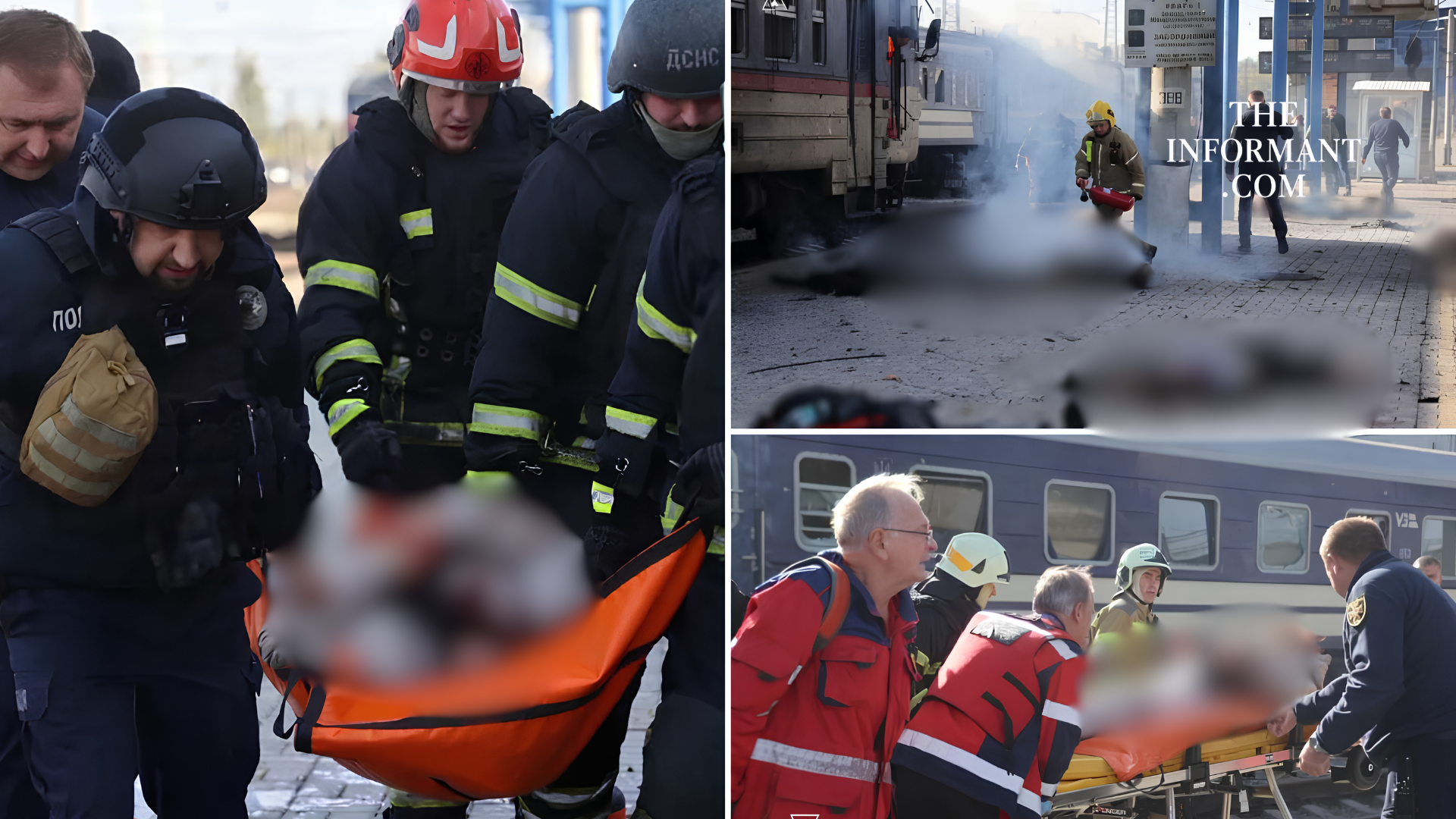
DNIPRO, Ukraine — October 29, 2026. A Russian drone strike hit a crowded railway platform in the Ukrainian city of Dnipro on Thursday, killing at least 14 people and injuring at least 14 others, according to Ukrainian officials and international news reports.
The attack struck the city’s main railway station as passengers gathered near trains preparing for departure. Emergency workers rushed to the scene to evacuate survivors, assist the injured and assess damage to the railway infrastructure.
RUSSIAN DRONE STRIKES CROWDED RAILWAY PLATFORM
Ukraine’s state railway operator, Ukrzaliznytsia, said a jet-powered drone hit a platform where a commuter train and a scheduled passenger service were standing.
Train No. 866, operating between Dnipro and Zaporizhzhia, was at the station when the strike occurred.
The railway company said passengers remained on the platform despite warnings of an elevated threat.
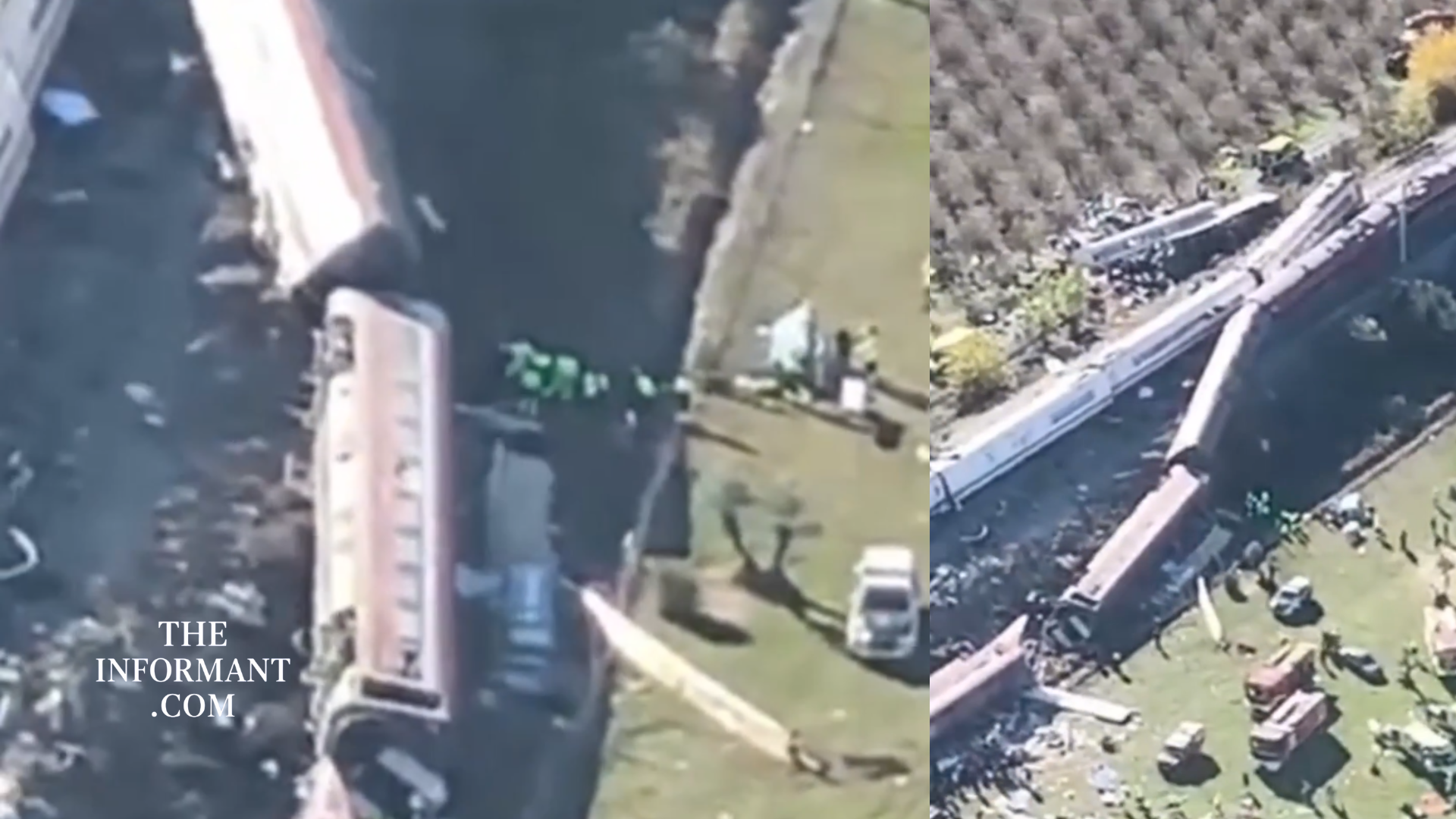
The explosion damaged the station area and railway equipment, leaving emergency personnel working among debris and damaged train carriages.
Photographs released by Ukrainian emergency services showed rescuers carrying injured people on stretchers as police and medical teams coordinated the response.
DEATH TOLL RISES TO AT LEAST 14
Oleksandr Hanzha, head of the Dnipropetrovsk Regional Military Administration, initially reported 13 deaths.
The toll subsequently increased to at least 14, according to an updated statement from the regional administration.
Reports also identified at least 14 injured people, although the figures changed during the initial emergency response.
Some victims were reported to be in serious condition, and a child was among those injured.
Authorities warned that casualty figures could change as hospitals and rescue teams completed their assessments.
UKRAINIAN PRESIDENT ZELENSKYY CONDEMNS ATTACK
President Volodymyr Zelenskyy condemned the strike, describing it as a horrific attack on civilians.
He said Russian forces had targeted a platform where ordinary passenger trains were standing.
The Ukrainian leader expressed condolences to the victims’ families and called for stronger international action against Moscow.
Zelenskyy also questioned the easing of certain sanctions involving Russian energy exports and business figures, arguing that economic pressure should not be reduced while attacks on Ukrainian civilians continue.
His comments reflected Kyiv’s continued efforts to persuade Western governments to maintain restrictions on Russia.
EMERGENCY CREWS RUSH TO RESCUE SURVIVORS
Rescue workers, police officers and medical personnel were deployed to Dnipro’s railway station immediately after the explosion.
Emergency responders transported injured passengers from the platform to ambulances and nearby medical facilities.
Images distributed by Ukrainian emergency services showed the aftermath of the attack, including damaged railway equipment and personnel assisting casualties.
Dnipro Mayor Borys Filatov described the incident as a tragedy and confirmed that a civilian passenger train had been struck.
Authorities continued inspecting the site and documenting damage as investigators worked to establish the circumstances of the attack.
OTHER RUSSIAN STRIKES KILL CIVILIANS ACROSS UKRAINE
The attack on Dnipro was part of a broader series of Russian drone and missile strikes reported across Ukraine on Thursday.
In the northern city of Chernihiv, a drone strike hit a busy street, killing two teenagers and injuring numerous people.
Another strike damaged an apartment building in Kremenchuk, killing three people and injuring others.
Together, the attacks killed at least 19 people across the affected cities, according to Ukrainian authorities.
The incidents underscored the continuing danger faced by civilians in residential areas, transportation facilities and other locations away from the front lines.
UKRAINIAN RAILWAYS REMAIN UNDER THREAT
Ukraine’s railway network has played an essential role throughout the war, transporting civilians, humanitarian supplies and other critical goods.
With commercial air travel severely restricted since Russia’s full-scale invasion in February 2022, passenger trains have become an important means of domestic and international transportation.
Russian strikes have repeatedly damaged railway infrastructure, including stations, tracks and electrical systems.
The attack in Dnipro adds to concerns about the vulnerability of passenger transportation during continuing drone and missile operations.
Under international humanitarian law, civilians and civilian infrastructure are protected against deliberate attacks unless specific military circumstances justify targeting an object. The legality of an individual strike requires examination of the relevant facts.
ATTACK OCCURS DURING LIMITED HUMANITARIAN TRUCE
The Dnipro strike occurred while Russia and Ukraine were observing a separate, localized humanitarian ceasefire in the southern Kherson region.
The six-day arrangement was intended to allow aid deliveries and potential civilian evacuations around Russian-occupied Oleshky.
The agreement, reached with U.S. involvement, applied only to the designated area and did not establish a nationwide ceasefire.
Fighting and long-range attacks continued elsewhere in Ukraine, including Dnipro, Chernihiv and Kremenchuk.
The simultaneous developments highlighted the limited geographic scope of the humanitarian arrangement.
INTERNATIONAL PRESSURE ON RUSSIA CONTINUES
Ukraine has repeatedly urged international partners to strengthen air defenses and maintain economic pressure on Russia.
Following Thursday’s attacks, Zelenskyy renewed his call for additional sanctions and stronger measures to protect civilians.
The strikes came as diplomatic efforts continued toward possible renewed negotiations involving Ukraine, Russia and the United States.
Moscow has consistently denied deliberately targeting civilians during the war.
The circumstances of the Dnipro attack remain subject to investigation, including questions concerning the target and the weapon used.
WHAT HAPPENS NEXT?
Ukrainian authorities are expected to continue assessing the damage, identifying victims and providing medical assistance to those injured.
Railway officials will evaluate the affected infrastructure and determine what repairs or operational changes are necessary.
Investigators will also document evidence from the strike.
The death toll may be updated as additional information becomes available.
For now, the attack has left at least 14 people dead at a civilian railway station and renewed international attention on the continuing human cost of the war in Ukraine.