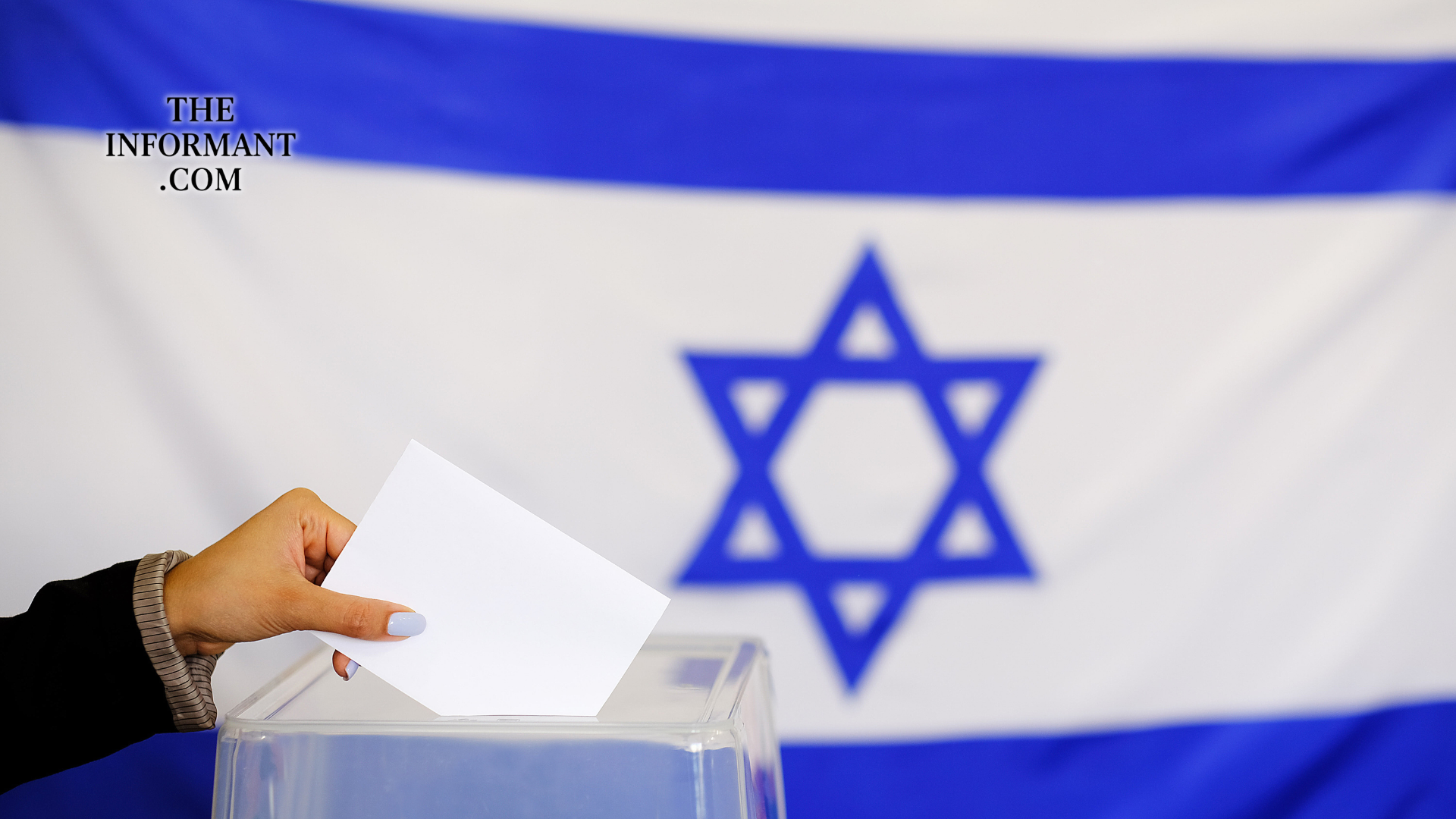
JERUSALEM — October 27, 2026. Long lines formed outside polling stations in several Arab communities across Israel on Tuesday as Palestinian citizens headed to the polls in an election that could change the country’s political leadership. From Abu Ghosh, near Jerusalem, to towns in northern and southern Israel, voters arrived amid heightened political tensions and renewed calls for greater representation after three years of war and conflict.
The election is the first since the Hamas-led attack on October 7, 2023, and the subsequent war in Gaza. For many Palestinian citizens of Israel, the ballot represents an opportunity to express dissatisfaction with government policies while demanding greater equality, improved public safety and more attention to their communities. According to figures released by Israel’s Central Elections Committee, nationwide turnout reached 44.9% by 2 p.m., compared with 38.9% at the same point in the 2022 election.
LONG LINES AT POLLING STATIONS IN ARAB COMMUNITIES
In Abu Ghosh, voters of different ages waited outside a school being used as a polling station, according to reporting by Spanish news agency EFE. Families, elderly residents and people with disabilities were among those waiting to cast their ballots. Some voters described unusually long queues and concerns about the voting process, while others emphasized the importance of participating in an election they believe could affect their future.
The turnout picture, however, varies across the country. Early figures indicated stronger participation in some Bedouin communities in the Negev, while several northern Arab towns initially recorded lower rates. The large queues and local reports provide evidence of mobilization in specific areas, but final turnout figures will be needed to determine whether Arab voter participation increased across Israel as a whole.
ARAB VOTER TURNOUT COULD INFLUENCE THE NEXT GOVERNMENT
Palestinian citizens of Israel represent approximately 18% of the eligible electorate, giving them potentially significant influence in a closely divided parliamentary system. Historically, their turnout has often been lower than the national average. In the 2022 election, participation in Arab and Druze communities reached 53.2%, compared with nationwide turnout of 70.6%.
Before Tuesday’s election, polling institute Midgam projected that Arab voter participation could rise to approximately 62% or 63%. Such an increase could strengthen parties representing Arab voters and affect the number of seats available to competing political blocs. However, those projections are not confirmed election results, and higher turnout does not automatically translate into support for a particular governing coalition.
ISRAEL ELECTION 2026
| ELECTION | TURNOUT |
|---|---|
| 2021 | 44.6% |
| 2022 | 53.2% |
RA’AM AND THE JOINT LIST SEEK GREATER POLITICAL INFLUENCE
Two major Arab-led political groups are contesting the election: Ra’am, led by Mansour Abbas, and the Joint List, a coalition bringing together left-wing and Palestinian political organizations. Their strategies differ, including over whether Arab parties should participate directly in a governing coalition or influence decisions from outside government.
Pre-election surveys suggested that the two lists could collectively secure approximately 13 to 15 seats in Israel’s 120-member Knesset. Because a governing majority requires at least 61 seats, their parliamentary representation could influence coalition negotiations. However, opposition leader Gadi Eisenkot has ruled out a formal coalition partnership with Arab parties, and possible arrangements for outside parliamentary support remain politically contested.
RIGHTS GROUPS REPORT DELAYS AND CONCERNS ABOUT ARMED OBSERVERS
The election has also generated complaints about conditions at polling stations serving Arab communities. The Joint List reported slow voting procedures in Abu Ghosh, while civil rights organizations raised concerns about identification checks, administrative delays and access to polling facilities elsewhere. Those complaints have not all been independently established as deliberate attempts to prevent voting.
Before Election Day, the Palestinian legal rights organization Adalah and the Joint List petitioned Israel’s Supreme Court to prohibit polling officials and party observers from carrying firearms inside polling stations. The court rejected the petition on October 25. Adalah said the legal action followed announcements by Likud and Religious Zionism that they intended to deploy approximately 2,000 observers in Arab towns and mixed communities. The parties presented their monitoring effort as a measure against electoral fraud, while petitioners warned that armed observers could intimidate voters.
GAZA WAR AND DOMESTIC INEQUALITY SHAPE VOTER CONCERNS
The war in Gaza has become a central issue for many Palestinian citizens of Israel. Some voters interviewed by EFE used the term genocide to describe Israel’s military campaign and said the election offered an opportunity to protest government policy. That characterization reflects their expressed views and should be distinguished from any final judicial determination concerning legal responsibility.
Alongside the war, voters have highlighted everyday issues affecting Arab communities, including violent crime, housing shortages, building permits, unequal opportunities and discrimination. A young engineering student interviewed in Abu Ghosh described wanting to speak Arabic freely and feel secure in his own country. An older resident emphasized her hope for peaceful coexistence, safety and improvements in local living conditions.
HIGH NATIONAL TURNOUT ADDS TO ELECTION-DAY UNCERTAINTY
Across Israel, participation has been particularly strong. More than three million people had voted by 2 p.m., putting national turnout at its highest recorded level for that hour in decades. Election officials said polling stations would remain open beyond the scheduled 10 p.m. closing time for eligible voters already waiting in line.
The contest will determine whether Prime Minister Benjamin Netanyahu’s political allies retain enough parliamentary support to remain in government or whether opposition parties can negotiate an alternative coalition. Because Israel uses proportional representation, the allocation of seats and the negotiations that follow are more consequential than the performance of any single party.
WHAT HAPPENS NEXT IN ISRAEL’S ELECTION?
The immediate focus remains on final voter participation, the distribution of parliamentary seats and whether reported polling-place problems affected eligible voters’ ability to cast their ballots. Election officials have not established widespread systematic fraud in the reporting available during Tuesday’s voting.
Once the ballots are counted, parties will face the challenge of assembling a viable governing majority. Arab-led political parties could hold significant parliamentary influence, depending on their final seat totals and the willingness of other groups to negotiate with them. Until official results are released, the outcome of Israel’s election remains undecided.