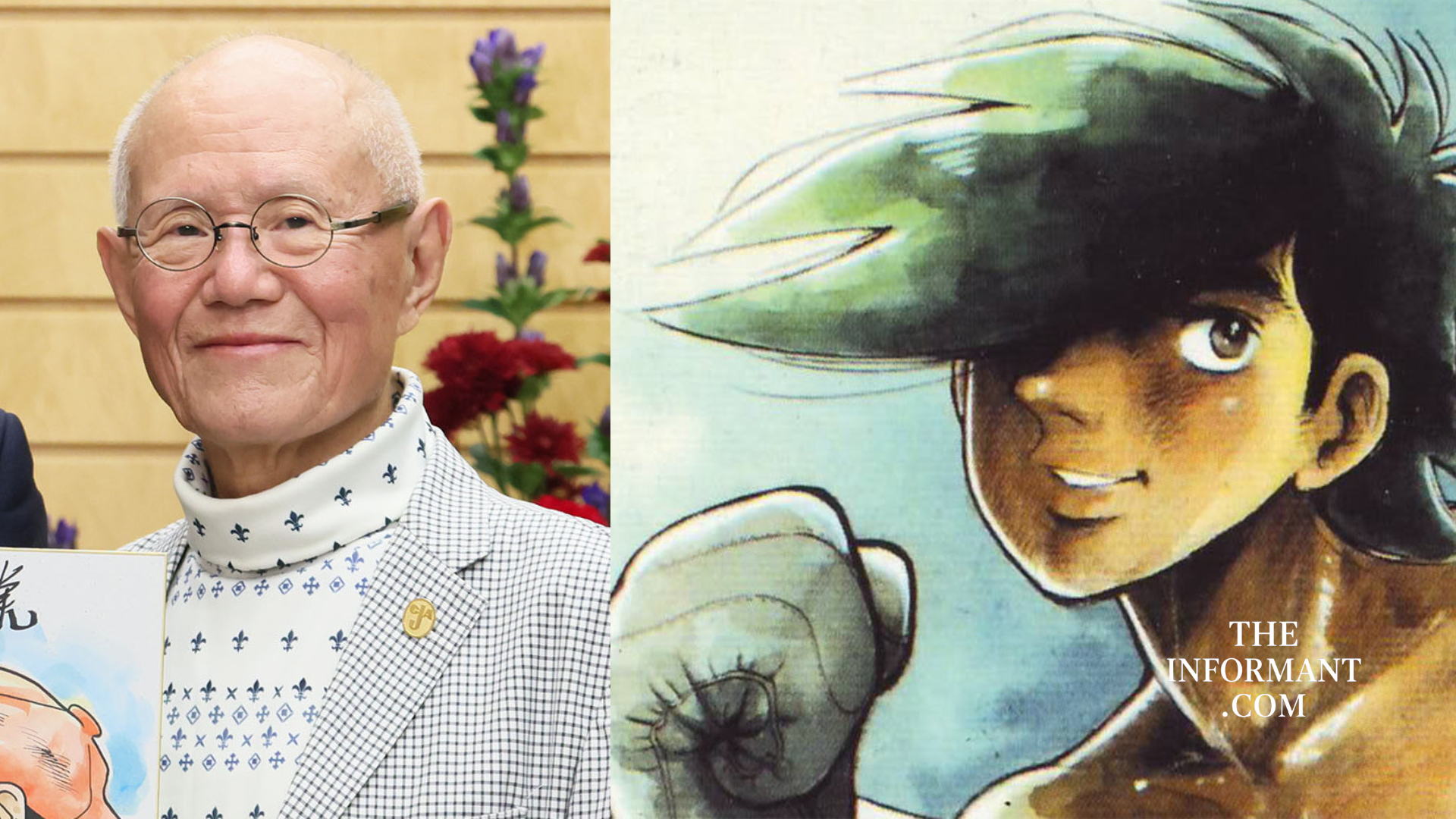
TOKYO, Japan — October 27, 2026. Tetsuya Chiba, the influential Japanese manga artist best known for illustrating the landmark boxing series Ashita no Joe, died October 22 at a hospital in Tokyo. He was 87.
His death was announced Tuesday by Japanese publishers, including Kodansha and Shogakukan. Japanese news agency Jiji Press reported that Chiba died from myelodysplastic syndrome, a group of disorders affecting blood cell production in the bone marrow.
JAPANESE PUBLISHERS CONFIRM CHIBA’S DEATH
Chiba’s passing was announced five days after his death, prompting tributes from manga publishers, fellow artists and readers across Japan.
According to Japanese media reports, his funeral was held privately with close family members in attendance.
Chiba’s wife, Sachiko, was identified as the chief mourner.
The artist had remained an important figure in Japan’s manga industry throughout a career spanning approximately seven decades.
Publishers remembered his contributions to postwar Japanese storytelling and his influence on generations of manga creators.
MYELODYSPLASTIC SYNDROME REPORTED AS CAUSE OF DEATH
Jiji Press identified myelodysplastic syndrome as the cause of Chiba’s death.
The condition involves disorders in which the bone marrow does not produce enough healthy blood cells.
Some forms can progress to acute myeloid leukemia, although the course of the disease varies among patients.
Chiba died at a Tokyo hospital on Thursday, October 22.
While Associated Press reporting confirmed his death through publisher Kodansha, its initial report did not specify a cause. The diagnosis was subsequently reported by Japanese news outlets citing Jiji Press.
“ASHITA NO JOE” BECAME A CULTURAL PHENOMENON
Chiba achieved international recognition through Ashita no Joe, also known in English as Tomorrow’s Joe or Fighting for Tomorrow.
The series began serialization in 1968 in Weekly Shōnen Magazine.
Chiba illustrated the manga, while the story was written by Asao Takamori, better known by his pen name Ikki Kajiwara.
The narrative follows Joe Yabuki, a troubled young man who discovers boxing and pursues a professional career while confronting poverty, hardship and personal tragedy.
Its portrayal of perseverance, rivalry and sacrifice resonated with readers in postwar Japan.
The manga became so influential that fans organized a symbolic funeral for Toru Rikiishi, one of the story’s central characters, following his death in the narrative.
BOXING SERIES HELPED TRANSFORM SPORTS MANGA
Ashita no Joe helped establish sports manga as a major form of Japanese popular storytelling.
Rather than focusing exclusively on athletic competition, the series explored class divisions, personal ambition and the emotional costs of pursuing success.
Its popularity led to animated television adaptations, films, video games and other productions.
The story also reached international audiences, introducing Joe Yabuki to generations of anime and manga fans.
The character’s distinctive appearance and memorable boxing scenes remain recognizable symbols of Japanese animation culture.
CHILDHOOD EXPERIENCES SHAPED HIS ART
Chiba was born in Tokyo in 1939 and spent part of his childhood in Japanese-controlled Manchuria, in present-day northeastern China.
Following Japan’s defeat in World War II, his family experienced difficult conditions before returning to Japan in 1946.
Those experiences influenced Chiba’s later work, particularly his interest in the consequences of war, human suffering and the importance of peace.
He began developing his artistic abilities as a young student and made his professional manga debut in the 1950s.
His early work included stories aimed at younger readers before he became widely recognized for sports-themed manga.
A CAREER SPANNING BOXING, SUMO AND OTHER SPORTS
Beyond Ashita no Joe, Chiba created numerous manga series exploring different sports and aspects of Japanese society.
His works included Harris no Kaze, a baseball-themed story, and Notari Matsutaro, which focused on sumo wrestling.
Other projects explored golf, martial arts and the experiences of young people navigating difficult circumstances.
His storytelling frequently combined humor, hardship and emotional growth.
Chiba also contributed to the development of younger artists through teaching, professional organizations and public advocacy.
FIRST MANGA ARTIST TO RECEIVE JAPAN’S ORDER OF CULTURE
In 2024, Chiba became the first manga artist to receive Japan’s Order of Culture, one of the country’s highest cultural distinctions.
The honor recognized his contributions to Japanese arts and the development of manga as a respected cultural form.
He had previously been selected as a member of the Japan Art Academy in 2022.
His recognition marked an important milestone for an artistic medium that had evolved from popular entertainment into a globally influential cultural industry.
Chiba also served in leadership roles within Japan’s manga community and advocated for artistic freedom and the preservation of manga culture.
MANGA INDUSTRY PAYS TRIBUTE TO A PIONEER
Following the announcement, manga creators and publishers shared messages recognizing Chiba’s influence.
George Morikawa, creator of the boxing manga Hajime no Ippo, was among the artists who publicly paid tribute.
Other creators remembered Chiba as a mentor and an important figure in the development of modern Japanese comics.
His work influenced the way sports stories could portray emotional struggle, ambition and the complexities of everyday life.
TETSUYA CHIBA LEAVES A LASTING CULTURAL LEGACY
Chiba’s death marks the loss of one of the most influential figures in Japanese manga history.
His career helped establish sports manga as a powerful storytelling genre while bringing attention to themes of perseverance, poverty, human dignity and peace.
Through Ashita no Joe and his extensive body of work, Chiba reached audiences far beyond Japan.
His contributions continue to shape the visual language and storytelling traditions of manga and anime, ensuring that his influence will remain visible for generations.