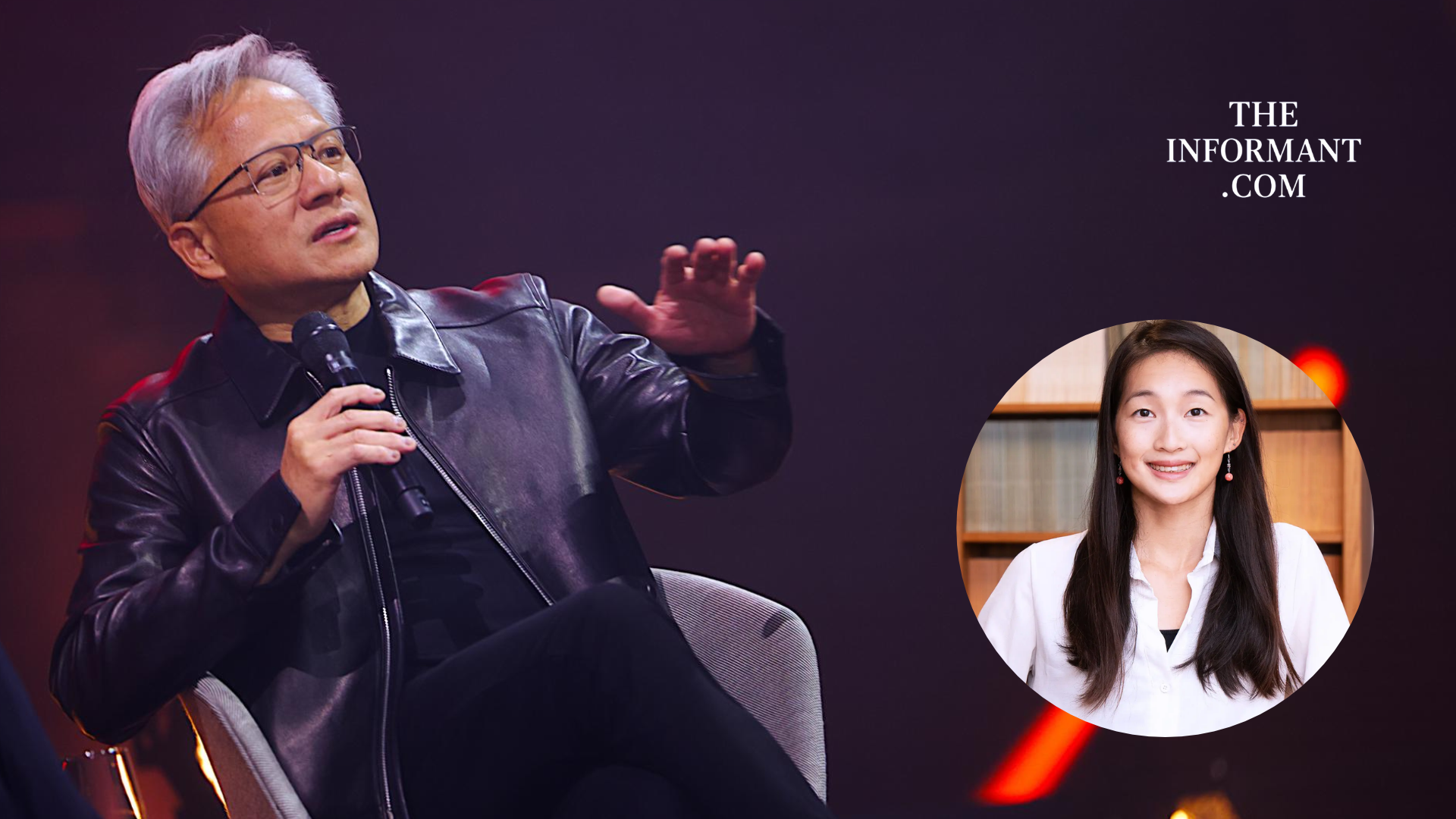
WASHINGTON, D.C. — October 29, 2026. U.S. intelligence officials concluded that a Chinese executive with close professional and social ties to Nvidia CEO Jensen Huang was gathering information for Beijing, according to a report published Thursday by The New York Times.
The executive, identified as Alice Huang, also known as Huang Le, held a senior position at Singapore-based data center company Megaspeed, a customer of the American semiconductor giant. The newspaper reported that President Donald Trump was briefed on the intelligence approximately a year ago but did not take action.
The allegations are based on unnamed sources familiar with classified intelligence. No public criminal charge or official finding against Alice Huang has been independently established.
U.S. INTELLIGENCE REPORTEDLY IDENTIFIES CHINESE ASSET
According to The New York Times, American intelligence agencies monitored Alice Huang as part of an investigation into Megaspeed’s activities and possible efforts to circumvent U.S. restrictions on advanced artificial intelligence chips.
The surveillance reportedly led officials to conclude that she was gathering information for Chinese intelligence.
Investigators also discovered that she maintained a close relationship with Jensen Huang, one of the technology industry’s most influential executives.
The relationship raised concerns that Beijing could obtain information about Nvidia’s business plans and discussions involving U.S. export controls.
The newspaper did not publicly disclose the classified intelligence underlying those conclusions.
WHO IS ALICE HUANG?
Alice Huang, also known as Huang Le, is a Chinese business executive associated with Megaspeed, a Singapore-based company providing artificial intelligence computing and data center services.
The company operates in Southeast Asia and has commercial relationships involving Nvidia technology.
Huang has held senior responsibilities at the company, although her current operational role remains unclear.
She has also worked in China’s investment and technology sectors.
Despite sharing a surname, Alice Huang and Jensen Huang are not known to be related.
The New York Times reported that photographs showed the two attending business gatherings in Taipei, including events in 2024 and 2025.
JENSEN HUANG’S RELATIONSHIP WITH EXECUTIVE DRAWS SCRUTINY
Jensen Huang, Nvidia’s co-founder and chief executive, regularly meets customers, suppliers and technology executives around the world.
According to the report, Alice Huang had developed a relationship with him through business and social gatherings in Asia.
U.S. intelligence officials reportedly became concerned that the contact could provide access to commercially or politically sensitive information.
However, the reporting does not establish that Jensen Huang knowingly assisted Chinese intelligence or deliberately disclosed confidential information.
Officials initially believed he was unaware of Alice Huang’s alleged intelligence activities.
Some administration officials have subsequently questioned that assessment, according to the newspaper, but no evidence of knowing participation by Nvidia’s CEO has been publicly established.
TRUMP WAS BRIEFED BUT DID NOT TAKE ACTION, REPORT SAYS
The New York Times reported that President Trump received an intelligence briefing about the concerns approximately one year ago.
According to people familiar with the discussions, the administration did not take action against Alice Huang at that time.
The report linked that decision partly to concerns about disrupting Nvidia’s commercial relationships and complicating negotiations between Washington and Beijing.
The United States has imposed restrictions on the export of advanced AI chips to China, citing national security concerns.
Nvidia has argued that allowing American companies to compete in the Chinese market can support U.S. technological leadership.
The White House declined to comment on the newspaper’s account, leaving the administration’s internal decision-making unconfirmed publicly.
NVIDIA DENIES SHARING SENSITIVE INFORMATION
Nvidia rejected suggestions that its CEO’s interactions with Alice Huang were unusual or inappropriate.
Company spokesperson John Rizzo said meetings with customers are a routine part of Jensen Huang’s responsibilities.
Nvidia emphasized that its regional cloud customers receive ordinary business information.
The company denied providing sensitive trade secrets or information relevant to U.S. national security.
Nvidia also said it expects American authorities to notify the company if they identify a threat to its operations or the broader technology industry.
The company’s response disputes the implication that its normal customer relationships provided access to protected information.
MEGASPEED FACES SEPARATE CHIP EXPORT QUESTIONS
Megaspeed has previously attracted scrutiny over concerns that companies in Southeast Asia could provide Chinese customers with access to advanced Nvidia computing technology.
U.S. authorities have examined whether restricted chips or computing resources were being routed through overseas data centers.
According to trade records cited by The New York Times, a Malaysian company associated with Megaspeed purchased at least $4.8 billion in artificial intelligence equipment containing Nvidia technology between June 2024 and February 2026.
Those purchases do not, by themselves, establish that export restrictions were violated.
The central question is whether the equipment or computing capacity was subsequently made available in ways that breached U.S. regulations.
Nvidia has previously disputed allegations that its products were being illegally diverted through Megaspeed.
MEGASPEED ANNOUNCES INTERNAL INVESTIGATION
Megaspeed said it was taking the allegations seriously and had retained outside legal counsel to conduct an internal investigation.
The company also stated that it would cooperate with U.S. authorities.
Its response indicates that the matter remains under review rather than resolved through a public legal proceeding.
The company has not publicly established that Alice Huang engaged in espionage.
Her precise current responsibilities within Megaspeed have also not been independently confirmed.
CHINA REJECTS ESPIONAGE ACCUSATIONS
The Chinese Embassy in Washington rejected the allegations reported by The New York Times.
Embassy spokesperson Liu Chang characterized the accusations as an unfounded attempt to discredit China.
Beijing has repeatedly criticized U.S. restrictions on semiconductor exports, arguing that Washington is politicizing international technology trade.
American officials, meanwhile, maintain that controls on advanced AI chips are necessary to protect sensitive technologies from potential military or intelligence applications.
The disagreement reflects the broader strategic competition between the United States and China over artificial intelligence.
WHY NVIDIA MATTERS TO U.S. NATIONAL SECURITY
Nvidia is a leading supplier of advanced graphics processing units used to train and operate artificial intelligence systems.
Its technology supports major data centers, scientific research and commercial AI applications.
Certain high-performance chips are subject to U.S. export controls because of concerns about their potential use in advanced military and intelligence systems.
The company’s international relationships therefore attract scrutiny from regulators and national security officials.
The reported investigation raises questions about how technology companies protect commercially sensitive information while operating in global markets.
It also highlights the difficulty of distinguishing legitimate international business activity from potential intelligence-gathering operations.
WHAT HAPPENS NEXT?
The allegations could prompt additional questions about U.S. export-control enforcement, Nvidia’s customer-screening procedures and the handling of intelligence warnings involving American technology executives.
Megaspeed has announced an internal investigation and said it will cooperate with U.S. authorities.
Nvidia maintains that its interactions with Alice Huang were routine and did not involve sensitive information.
China rejects the accusations, while the White House and U.S. intelligence agencies have not publicly confirmed the classified findings.
For now, the central allegation remains an intelligence assessment described by unnamed sources to The New York Times, not a publicly adjudicated finding of espionage.
The case illustrates the growing intersection of artificial intelligence, international commerce and national security in the relationship between Washington and Beijing.